 Plan This Experience
Walking
Safaris.
On foot, the bush becomes something else entirely. You hear what you cannot hear from a vehicle. You read tracks in the dust. You feel the scale of an elephant at ground level. The game drive shows you Africa. The walking safari makes you part of it.
Why Walk When You Can Drive?
Because a game drive and a walking safari are not the same experience and cannot replace each other. A game drive is exceptional for covering ground, spotting wildlife at distance and following predators. A walking safari strips all of that away and puts you directly inside the ecosystem, at ground level, with all your senses engaged simultaneously.
On a walking safari you notice what a vehicle rolls past without stopping: the spiral of a dung beetle working in the dust, the way a giraffe's shadow falls across the grass at dawn, the difference between a lion track and a leopard track, the smell of an elephant herd moving through acacia scrub 200 metres upwind. Your guide, who has spent years reading this landscape on foot, turns every step into a lesson. The bush that looked empty from the vehicle is revealed as full of life, history and complexity.
Walking safaris are conducted by armed, licensed rangers and expert naturalist guides. They are not dangerous adventures for thrill-seekers. They are careful, purposeful, deeply informed encounters with the African wilderness at its most intimate. The pace is unhurried. The group is small. The conversation between guide and guests that develops over a two-hour morning walk is often described by visitors as one of the most memorable parts of their entire safari.
Across our destinations, we offer walking safaris in Uganda's Queen Elizabeth and Lake Mburo National Parks, Kenya's Masai Mara conservancies and Amboseli, Tanzania's Ngorongoro Conservation Area and Ruaha, and Rwanda's Nyungwe Forest and Akagera. Each delivers a completely different walking landscape and a different relationship with the wildlife and terrain underfoot.
Full day available in some parks
All Five Senses
A vehicle insulates you from the bush. On foot you smell the dust and the animals, hear the insects and birds at full volume, feel the heat radiating from the ground and read the wind direction the way your guide does. The experience is total immersion rather than observation from behind glass.
The Small World
Game drives chase large animals. Walking safaris reveal everything in between: tracks, dung, feathers, insect activity, seed pods, termite mounds, spider webs heavy with dew. A skilled guide on a two-hour walk in seemingly empty bush will show you more life than most visitors notice in a week of game drives.
Real Scale
An elephant at 30 metres from a vehicle feels large. An elephant at 30 metres on foot is one of the most visceral experiences in nature. The scale recalibrates something fundamental. You understand your place in the ecosystem in a way that a game drive, for all its excellence, cannot deliver.
The Guide Relationship
On a walking safari you are in conversation with your guide for two uninterrupted hours. The depth of knowledge that emerges from a walk with an experienced African naturalist, covering ecology, animal behaviour, tracking, plant medicine and local culture, is the most educational experience we offer.
Choose Your Walk
Morning Bush Walk
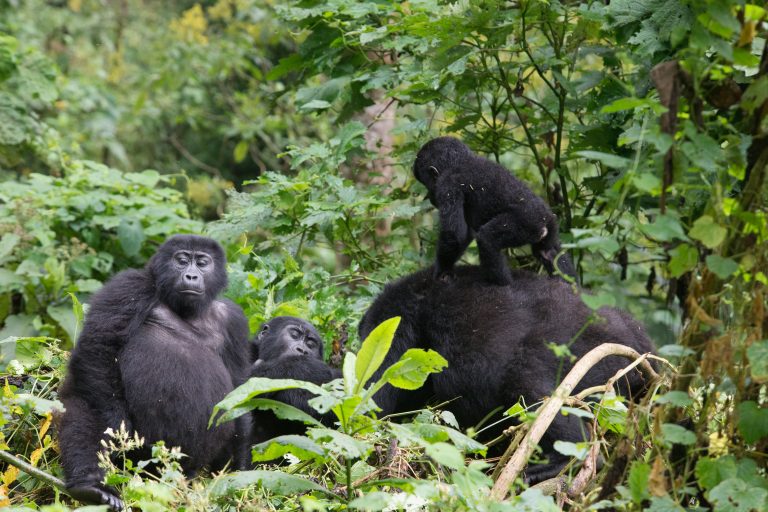
The morning walk, departing just after dawn at 6 to 6.30am, is the most rewarding walking safari experience. Animals are active, the air is cool, the light is extraordinary and the guide can read the night's events from fresh tracks in the dust. A morning walk typically lasts two to three hours, covering three to six kilometres at a slow, exploratory pace. The guide sets the route based on animal signs from the previous evening and adjusts direction throughout based on what is happening in the bush. Morning walks are available in all our walking safari destinations and pair perfectly with an afternoon game drive back at the lodge.
Forest Trail Walks
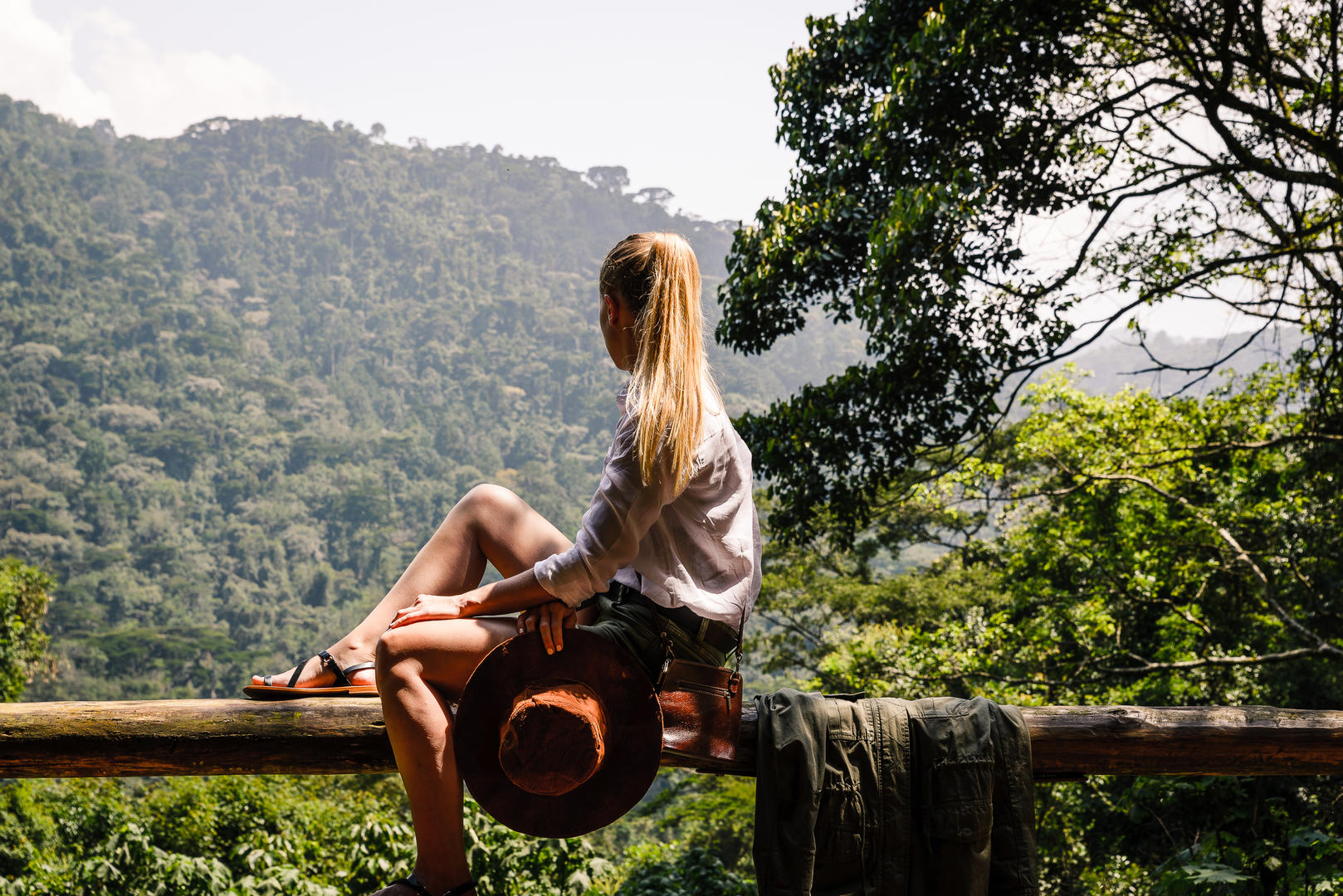
Forest walking safaris in Uganda's Kibale, Bwindi or Rwanda's Nyungwe are a completely different experience to open savannah walks. The forest is layered, dense, humid and constantly alive with sound. A forest trail walk delivered by an experienced guide reveals the architecture of a tropical rainforest in extraordinary detail: the fig trees that support entire ecosystems, the medicinal plants used by local communities for centuries, the network of animal trails worn into the forest floor by buffalo, elephant and chimpanzee over decades. Nyungwe Forest in Rwanda offers some of East Africa's finest forest walking, with over 300 kilometres of trail through Africa's oldest highland rainforest.
Village and Community Walks
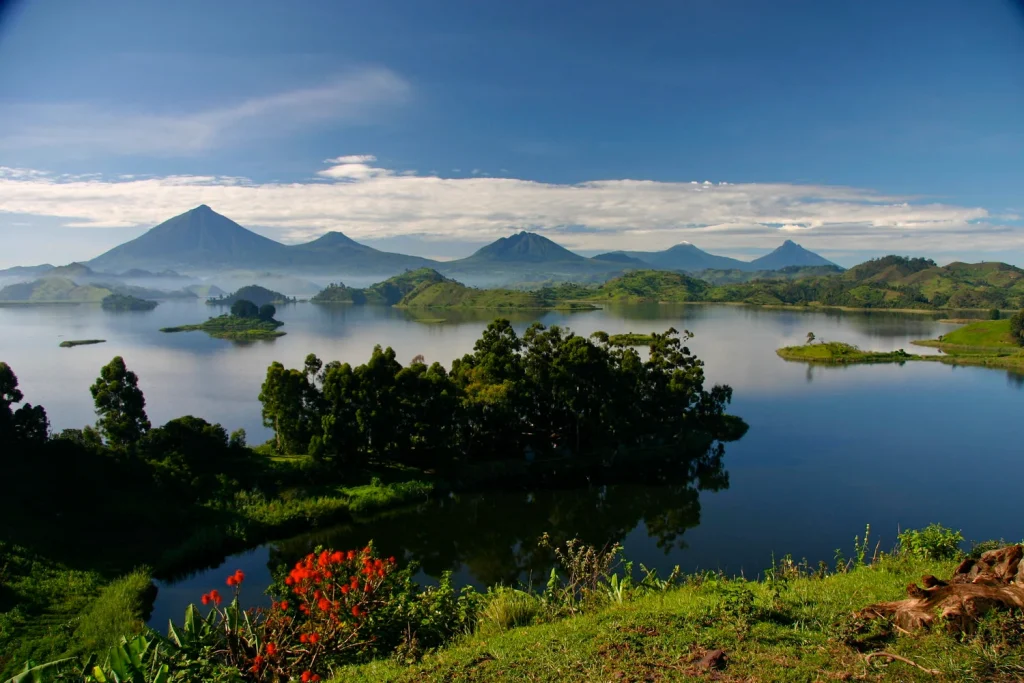
Beyond wildlife, walking safaris in East Africa often incorporate visits to local communities that give context and humanity to the wilderness experience. The Bigodi Wetland walk near Kibale in Uganda is community-run and pairs excellent birding and primate sightings with a genuine immersion in the daily life of a rural Ugandan community. In Rwanda's Ibyiwachu Cultural Village near Volcanoes National Park, a guided community walk introduces former poachers now working as cultural ambassadors, traditional medicine practitioners, local dancers and the families whose lives have been transformed by gorilla tourism. These community walks are not performative. They are genuine, thoughtful encounters that significantly enrich the safari experience.

Multi-Day Walking Safaris
Multi-day walking safaris, available primarily in Tanzania's Ruaha and Selous ecosystems and in Kenya's private conservancies, take you deeper into wilderness than any single morning walk allows. You cover 10 to 20 kilometres per day, sleeping in mobile fly camps carried ahead by support staff, and spend multiple consecutive days reading the same landscape at ground level as the wildlife and light change around you. These are serious physical undertakings suitable for fit, experienced walkers who want to genuinely live in the African bush rather than observe it. The guide relationship over three to five days becomes uniquely deep, and the encounters with wildlife that accumulate over multiple days in the same ecosystem are among the most extraordinary available anywhere in Africa.
Where We Walk
Six outstanding walking safari destinations across four countries. Each offers a completely different landscape underfoot.
Lake Mburo NP
Uganda's best walking safari destination. The only national park in Uganda where visitors walk freely among zebra, impala, topi and eland with no vehicle required. The landscape is open acacia woodland and grassy valleys ideal for walking, and the proximity to Kampala makes it an accessible introduction to the bush on foot. Morning walks depart at dawn with experienced guides and armed rangers.
Bigodi Wetland
A community-run wetland walk just outside Kibale Forest. Two hours through papyrus swamp and riverine forest delivers 200-plus bird species, red and black and white colobus monkeys, L'Hoest's monkeys and occasional baboons. Community fees go directly to local schools and health centres, making this one of Uganda's best conservation tourism models. Pairs perfectly with a morning Kibale chimp trek.
Masai Mara Conservancies
Walking safaris are not permitted inside the Masai Mara National Reserve itself but are a highlight of the private conservancies bordering it. With no crowds and off-road driving rights, the conservancy walking experience is intimate and unfiltered. Guided walks through Mara North, Olare Motorogi and Naboisho conservancies deliver encounters with lion, elephant, giraffe and the Mara's extraordinary birdlife from the ground up.

Ngorongoro Highlands
The Ngorongoro Conservation Area permits walking safaris on the crater rim and in the surrounding highland forest. The forest walk through the rim's montane forest is extraordinary: ancient trees draped with moss, the distant crater visible through the canopy, and resident colobus monkeys. The crater rim itself at 2,200 metres delivers panoramic views across one of Africa's greatest wildlife arenas and is accessible year-round regardless of crater floor conditions.
Nyungwe Forest
Africa's largest montane rainforest and one of the continent's most extraordinary walking destinations. Over 300 kilometres of maintained trail through ancient forest that has been continuously forested for more than half a million years. The forest supports 13 primate species, 310 bird species and extraordinary botanical diversity. The Canopy Walk, a suspension bridge system 50 metres above the forest floor, is one of East Africa's most unique experiences and only accessible on foot.
Ruaha NP
Tanzania's largest national park and one of Africa's finest walking safari destinations. Ruaha's dramatic baobab landscape, the Great Ruaha River system and high concentrations of elephant, lion, leopard and wild dog make it exceptional for multi-day walking safaris. Remote, uncrowded and genuinely wild, Ruaha delivers the most immersive wilderness walking in Tanzania. Mobile fly camp operations from select camps allow guests to sleep in the bush across multiple nights of walking.
Walking Safely in Wild Africa
How Walking Safaris Are Kept Safe
- Every walk is led by a licensed, armed ranger employed by the national park or conservancy authority. The ranger's primary role is your safety.
- A professional naturalist guide accompanies every group, responsible for interpretation, route selection and wildlife identification.
- Maximum group size of 6 to 8 ensures the group can move quietly and the guide can maintain sight of every member at all times.
- Pre-walk briefing covers how to behave if wildlife is encountered at close range: stay still, stay together, do not run, do not make sudden movements.
- The guide reads wind direction and animal body language continuously to assess and manage approach distances.
- All walks depart from and return to a vehicle which follows at a distance as a safety fallback.
- Guests with medical conditions, severe mobility issues or respiratory illness should discuss suitability with us before booking a walking safari.
- Children under 12 are not permitted on armed ranger walking safaris. Minimum age is 16 in some parks.
What to Wear and Bring
- Neutral, muted clothing: khaki, olive, tan or grey. Avoid white, bright colours and camouflage (prohibited in some areas).
- Good ankle-support walking shoes or light hiking boots. Sandals are not appropriate.
- Long-sleeved shirt for sun protection and insect protection in forest areas.
- Warm layer for early morning starts. Bush temperatures before 8am can be cold even in equatorial parks.
- Wide-brim hat and high-SPF sunscreen for open savannah walks.
- DEET insect repellent, particularly for wetland and forest walks.
- Personal binoculars (8x42 recommended). Shared binoculars are a significant constraint on a walk.
- Small daypack with 1.5 litres of water. Energy snacks for longer walks.
- Camera with a versatile zoom lens (24-200mm). Walking safaris are intimate rather than long-range so a super-telephoto is less critical than on game drives.
- Silence is valuable. Leave phones on silent and keep conversation low when moving through the bush.
Walking Safaris in Pictures