 Plan This Safari
Kenya.
Where safari
was born.
The Masai Mara. The Great Migration. Tree-shaded kopjes where lions sleep through golden afternoons. Kenya delivers the archetypal African safari experience: epic in scale, intimate in lodges, and unmistakable in character.
The Original Safari Country
Kenya invented the safari. The word itself is Swahili for journey, and for over a century this East African nation has been the reference point against which all other African wildlife destinations are measured. The Masai Mara is the most famous game reserve in the world. The Great Migration is the most watched natural event on the planet. And the Kenyan safari experience, refined over generations of practice, remains the gold standard of guided wildlife travel.
Kenya stretches from the Indian Ocean coast to the Great Rift Valley, from the volcanic highlands of the Central Plateau to the semidesert of the north. Its landscapes are enormously varied and its wildlife correspondingly diverse. The Masai Mara alone holds one of the highest concentrations of predators on earth, with lions, cheetahs and leopards regularly encountered within a single game drive. Amboseli delivers elephants in their hundreds beneath the snow-capped summit of Mount Kilimanjaro. Samburu hosts the Northern Specials, five species found nowhere further south.
Kenya is also the most accessible safari destination in East Africa. Nairobi's Jomo Kenyatta International Airport receives direct flights from London, Amsterdam, Paris, Dubai and Doha. Most major Kenyan parks and conservancies are a short charter flight from Wilson Airport in Nairobi. The country's infrastructure is the most developed in the region, its guides among the most experienced and its lodges among the most celebrated.
Kenya pairs naturally with Tanzania for a combined Migration circuit, with Uganda and Rwanda for a primate and savannah combination, or with the Kenyan coast and Zanzibar for the definitive safari-and-beach experience. It is the anchor of East Africa for most visitors, and with good reason.
USD widely accepted
New York: ~15 hrs
Dubai: ~5 hrs
National parks: USD 60 per day
The Great Migration
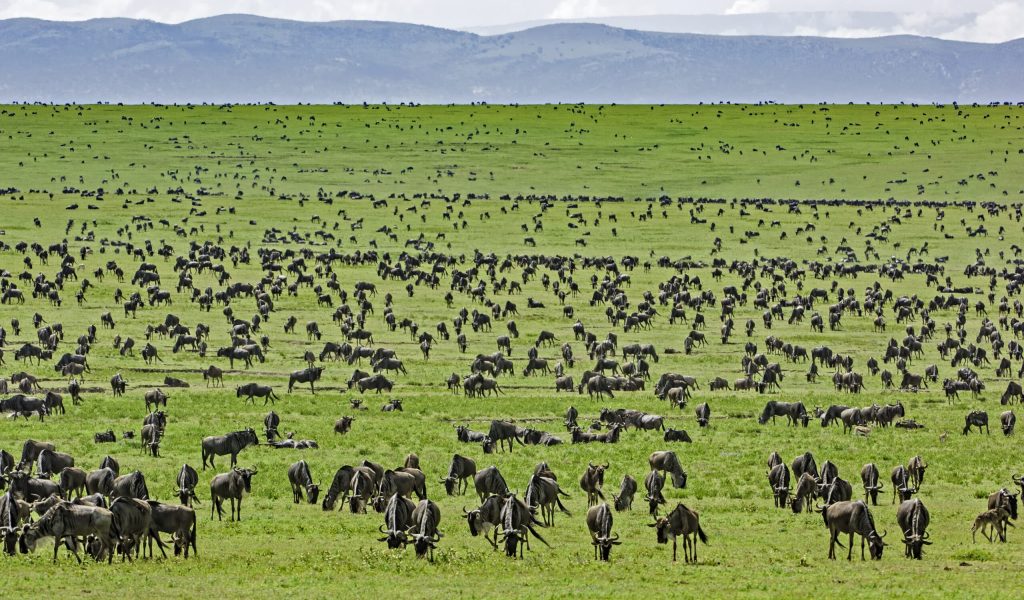
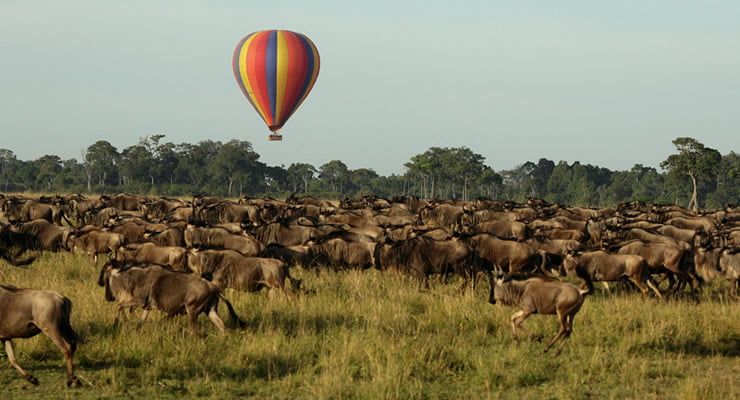
1.5 million wildebeest, 200,000 zebras and 400,000 gazelles move through the Masai Mara from July to October. The Mara River crossings are among the most dramatic wildlife events on earth.
Year-Round Big Cat Sightings
Kenya's predator density is extraordinary. The Masai Mara is one of the only places on earth where lion, cheetah and leopard can all be seen in a single day, throughout the year.
Private Conservancies
Adjacent to the Masai Mara, Kenya's private conservancies offer exclusive game drives with off-road access, night drives, walking safaris and guided bush experiences unavailable in the national reserve.
Safari and Beach in One Trip
The Kenyan coast, Diani Beach and the Lamu Archipelago provide a perfect counterpoint to the savannah. A week on safari followed by days at the Indian Ocean is a classic East Africa itinerary.
Kenya's Wild Landscapes
Kenya has over 50 national parks, reserves and conservancies. These are the six that matter most to the discerning safari traveller.

Masai Mara National Reserve
The Masai Mara needs no introduction. Kenya's most celebrated game reserve sits in the Great Rift Valley's southwestern corner, forming the northern extension of Tanzania's Serengeti ecosystem. The rolling grasslands, acacia woodlands and riverine forest along the Mara and Talek rivers support one of the most concentrated and diverse wildlife populations anywhere in Africa.
The reserve is home to large resident populations of lions, leopards, cheetahs, elephants, buffalos, hippos and Nile crocodiles. But it is the annual arrival of the Great Migration between July and October that defines the Mara's global reputation. Over a million wildebeest and zebras cross the Mara River in a series of dramatic, terrifying crossings that represent nature at its most raw and compelling.
The private conservancies bordering the Mara reserve (Olare Motorogi, Naboisho, Ol Kinyei and others) offer an exclusive experience unavailable in the reserve itself: off-road game drives, night drives, walking safaris and bush dinners with no crowds and no boundaries.
Amboseli National Park
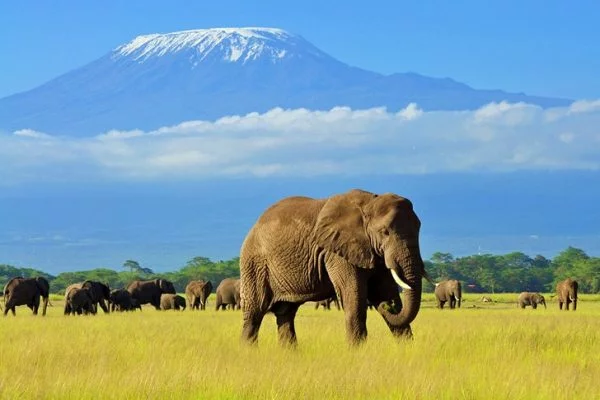
Amboseli is the park of superlatives. The view of elephants moving through golden grass with the summit of Mount Kilimanjaro rising 5,895 metres above the Tanzania border behind them is arguably the most iconic photograph in African wildlife travel. It is a scene so perfectly composed by nature that it appears staged, and yet it is real, accessible and repeatable on almost every visit to the park.
Amboseli's elephant population is one of the most studied in the world, with some family groups being researched continuously since the 1970s. The herds are large, accustomed to vehicles and remarkably relaxed, making photography opportunities exceptional. The park's wetland system, fed by underground streams from Kilimanjaro's glaciers, supports hippos, buffalos and remarkable concentrations of waterbirds.
Amboseli is just 4 hours from Nairobi by road and 45 minutes by charter aircraft. It pairs naturally with the Masai Mara on most Kenya circuits and makes an outstanding first or last stop on a southern Kenya route.
Samburu National Reserve
Samburu is Kenya's north, and it feels completely different from the Masai Mara. The landscape is arid, rocky and dramatic: red dust, dry riverbeds, dramatic escarpments and the Ewaso Ng'iro River cutting through the semi-desert floor. The wildlife is distinct too, featuring the Northern Specials, five endemic species found only north of the Equator in Kenya and Somalia.
The Northern Specials are Samburu's unique selling point: Grevy's zebra (the world's largest and most endangered zebra), reticulated giraffe (the most beautiful and rarest giraffe subspecies), Somali ostrich, gerenuk (the browsing gazelle that stands on its hind legs to reach acacia leaves) and beisa oryx. These five alone make Samburu essential for serious wildlife enthusiasts.
Leopards are also reliably sighted in Samburu, often in trees along the riverbank during morning drives. Lions, elephants, hippos and Nile crocodiles are present throughout the year. The reserve is remote enough to feel genuinely wild and uncrowded even in peak season.
Laikipia Plateau
Laikipia is one of Kenya's best-kept secrets and one of Africa's most successful community conservation models. Stretching across 9,500 square kilometres north of Nairobi on the edge of the Great Rift Valley, it encompasses a mosaic of private ranches, community conservancies and wildlife corridors managed for both wildlife and local communities.
The plateau hosts Kenya's largest black rhino population outside Nairobi National Park, alongside elephants, lions, wild dogs, cheetahs, Grevy's zebras, reticulated giraffes and over 500 bird species. Activities unavailable in most Kenyan parks are standard here: night drives, walking safaris, horseback safaris, camel safaris and community-run cultural experiences.
The lodges of Laikipia (Ol Pejeta, Borana, Lewa, Ol Malo, Ol Lentille) represent some of the finest in Kenya, combining exceptional wildlife access with extraordinary landscapes and exclusive, bespoke experiences that feel a world away from the shared game drives of the Masai Mara.
Tsavo National Parks
Tsavo East and Tsavo West together form the largest protected area in Kenya, covering over 20,000 square kilometres of spectacular semi-arid landscape. The red dust of the plains, the dramatic Yatta Plateau (the world's longest lava flow), the palm-fringed Galana River and the volcanic Chyulu Hills create a landscape that feels ancient and untouched.
Tsavo is famous for its large elephant herds, whose skin is permanently stained red from the volcanic dust. The park also supports large populations of lions, buffalos, hippos, Nile crocodiles, giraffes and an extraordinary diversity of birdlife. The Mzima Springs in Tsavo West provide an underwater viewing window to hippos and fish through a glass panel.
Tsavo sits between Nairobi and Mombasa and combines naturally with the Kenyan coast. A short charter flight from Tsavo to Diani Beach or Malindi makes it one of Kenya's most satisfying safari-and-beach combinations, and Tsavo's uncrowded parks provide a genuinely wild contrast to the more visited Masai Mara.
Lake Nakuru National Park
Lake Nakuru is one of the Great Rift Valley's most striking landscapes. The shallow soda lake sits inside a national park that also protects dense acacia woodland and open grassland. The park is fenced, creating a predator-safe environment that has been used to establish viable populations of both black and white rhinos, making it one of the most reliable rhino viewing destinations in East Africa.
The lake itself is famous for its flamingos. In optimal conditions, hundreds of thousands of lesser and greater flamingos turn the shoreline pink in one of nature's most spectacular colour displays. The exact numbers fluctuate with water levels and food availability, but some flamingos are present year-round. Over 400 bird species have been recorded in the park.
Lake Nakuru sits just 3 hours from Nairobi on the Trans-Africa Highway and is easily combined with the Masai Mara on a circuit through the Rift Valley. It works particularly well as a first night out of Nairobi en route to the Mara or Laikipia.
When to Go to Kenya
Kenya offers excellent game viewing year-round. Season choice depends on what you most want to see: the Great Migration crossings, peak predator activity, or a quieter, greener and more affordable experience.
Migration Season
The Mara River crossings are Kenya's most dramatic wildlife event. The wildebeest herds arrive in the Masai Mara from Tanzania in July and the crossings reach their peak intensity in August and September. This is when global demand for Mara camps is highest: lodges book out 9 to 12 months ahead and prices peak. But for those who prioritise the Migration above all else, July to October in the Masai Mara is irreplaceable.
Dry Season
Kenya's long dry season from January to March delivers outstanding game viewing across all parks. Vegetation is low, water sources are concentrated and predators are reliably active. The Masai Mara is spectacular for big cat sightings without the Migration crowds. Amboseli delivers clear Kilimanjaro views in the crisp morning light. This is considered by many experienced safari travellers to be the finest time to visit Kenya for overall wildlife quality.
Short Rains
October and November bring Kenya's short rainy season. Showers are typically brief and afternoon rather than all-day. The landscape greens up quickly, creating beautiful photography conditions. Lodge rates drop significantly and crowds thin considerably. Newborn calves and foals are abundant in November, bringing exceptional predator activity as lions, cheetahs and wild dogs follow the calving. An underrated and excellent time to visit Kenya for the independent traveller.
Long Rains
Kenya's main rainy season runs from April to June. The Masai Mara can be muddy and game drives on the black cotton soil occasionally challenging. However, the landscape is extraordinarily beautiful at this time: vivid green, full of wildflowers and with dramatically reduced visitor numbers. Bird diversity peaks with migrants present. Some lodges close for renovation and those that remain open often offer attractive low-season rates. Not recommended for first-time visitors but excellent for those seeking a private Kenya.
What You Will Encounter
Lions
Kenya holds one of Africa's most significant lion populations. The Masai Mara's lion prides are among the largest on the continent and extremely relaxed around vehicles, making photography conditions exceptional.
- Best location: Masai Mara, Amboseli, Tsavo
- Pride sizes up to 20 individuals
- Year-round reliable sightings in the Mara
- Kills regularly observed on morning drives
Leopards and Cheetahs
Kenya is one of the best places in Africa to see both leopard and cheetah. The Masai Mara's open grassland makes cheetah sightings particularly reliable, while the conservancies provide excellent leopard viewing in acacia and riverine forest.
- Cheetah: Masai Mara and conservancies
- Leopard: Samburu riverbanks, Laikipia
- Both species seen year-round
- Cheetah coalitions regularly encountered
African Elephants
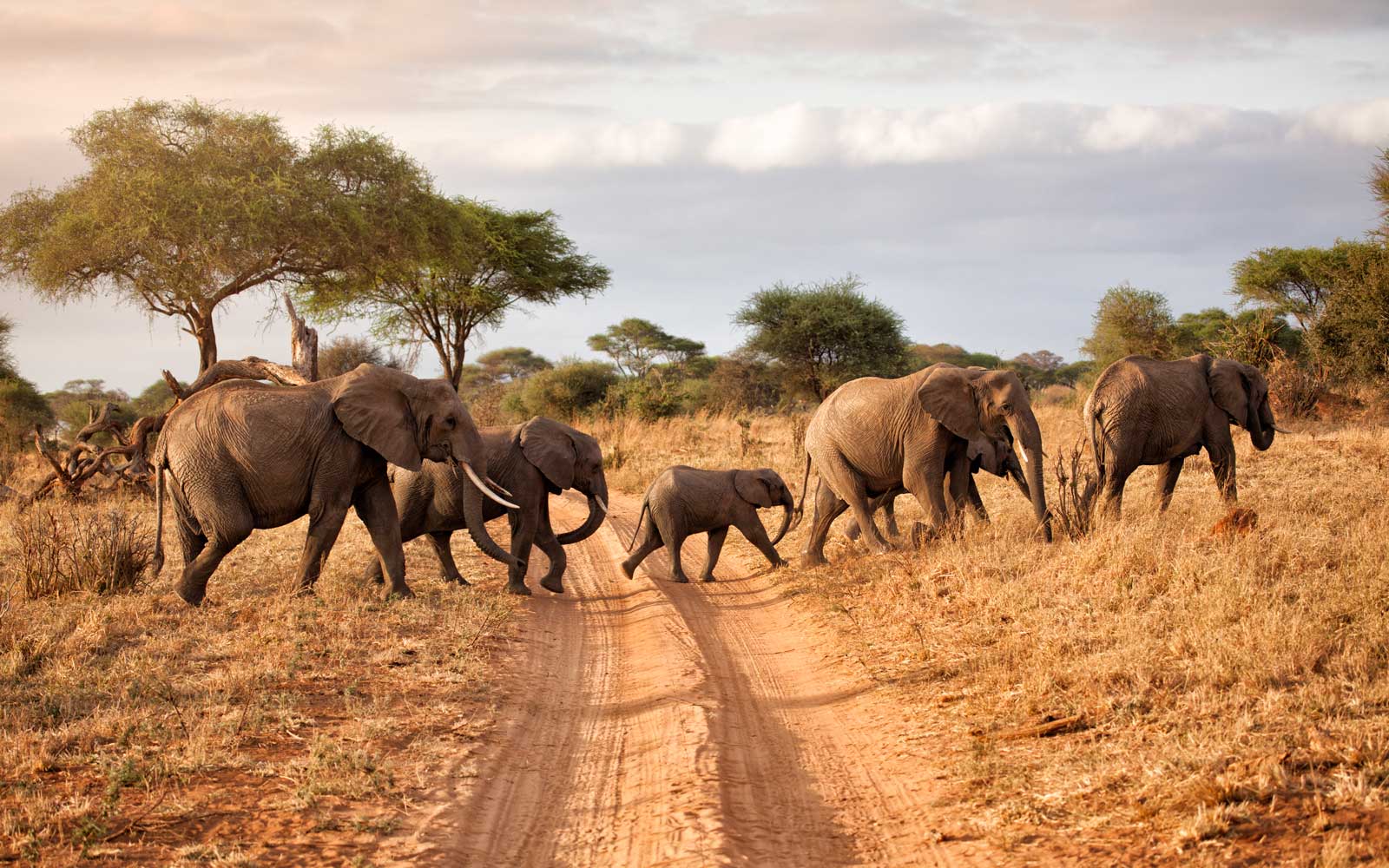
Kenya's elephant population is one of the largest and most studied in Africa. Amboseli's research families have been tracked for over 50 years. Tsavo holds large, red-dust-stained herds. Laikipia has growing elephant populations on private conservancies.
- Amboseli: best elephant photography
- Tsavo: largest individual herds
- Laikipia: intimate bush encounters
- Year-round across all parks
The Great Migration
The greatest wildlife spectacle on earth. Over 1.5 million wildebeest and 200,000 zebras move between Tanzania's Serengeti and Kenya's Masai Mara following the rains. The Mara River crossings (July to October) are the most dramatic moments.
- River crossings: July to October
- Peak crossing intensity: August to September
- Calving season: January to February in Tanzania
- Year-round movement never truly stops
Rhinos
Kenya has made significant progress in rhino conservation. Both black and white rhinos are found in Laikipia, Lake Nakuru, Ol Pejeta Conservancy and Nairobi National Park. The country holds the largest black rhino population in Africa outside South Africa.
- Black rhino: Laikipia, Nairobi NP
- White rhino: Ol Pejeta, Lake Nakuru
- Ol Pejeta: close encounter safaris on foot
- Year-round at all rhino conservancies
Birds: 1,100+ Species
Kenya is Africa's second finest birding destination after Uganda. With over 1,100 recorded species, it offers extraordinary variety: flamingos on Lake Nakuru, fish eagles along the Mara River, lilac-breasted rollers on acacia branches and the iconic grey crowned crane across the savannah.
- 1,100+ recorded species nationally
- Grey crowned crane: Kenya's national bird
- Flamingos: Lake Nakuru and Lake Bogoria
- Best birding: October to April with migrants
What You Can Do
Great Migration River Crossings
Watching a herd of wildebeest throw itself into the Mara River, with Nile crocodiles waiting below and a wall of animals pressing from behind, is one of the most visceral and extraordinary wildlife experiences available anywhere on earth. The crossings are unpredictable, which makes them addictive. You may wait hours at a crossing point only for the herd to turn away. Then without warning, one animal commits, and within minutes the river is a churning mass of bodies, hooves and spray. Your guide's ability to read the herd is what determines your experience, and ours are among the best in the Mara.
Hot Air Balloon Safari
Floating above the Masai Mara at dawn as the sun rises over the escarpment, watching wildlife move across the plains 300 metres below while the pilot navigates between herds, is one of Kenya's signature luxury experiences. The hour-long flight is followed by a champagne bush breakfast served in the field wherever the balloon lands. The balloon safari over the Mara is not cheap, but it is among the most memorable hours you will spend in Africa.
Walking Safaris
Walking on the Kenyan savannah with an armed ranger and tracker changes your relationship to the landscape fundamentally. The bush becomes something you inhabit rather than observe. You notice things that a vehicle conceals: the sound of termites, the texture of elephant dung, the tracks of a leopard from the night before. Kenya's private conservancies and Laikipia's ranches offer the finest walking safari experiences in East Africa, with highly trained and experienced guides who know every square kilometre of their land.
Maasai Cultural Experiences
The Maasai people are one of Africa's most iconic and culturally distinct communities. Semi-nomadic cattle herders who have coexisted with Kenya's wildlife for centuries, the Maasai are the guardians of much of the land that makes Kenya's safari ecosystem possible. Visiting a Maasai manyatta (homestead), watching warriors jump, meeting the women who make the beadwork jewellery, and understanding how the community relates to the wildlife on its land adds a depth to any Kenya safari that pure game driving cannot provide.
Safari and Kenya Coast
Kenya's Indian Ocean coastline is one of East Africa's great pleasures: 536 kilometres of white sand beaches, turquoise warm water, Swahili food culture and the ancient trading port of Lamu. Diani Beach south of Mombasa is Kenya's finest beach destination, with a range of lodges from boutique to resort-scale. The Lamu Archipelago is remote, ancient and extraordinary. Combining 5 to 7 days of safari in the Masai Mara or Tsavo with 4 to 5 days on the coast creates the definitive Kenya experience and requires only a 45-minute charter flight between the two worlds.
Nairobi City Highlights
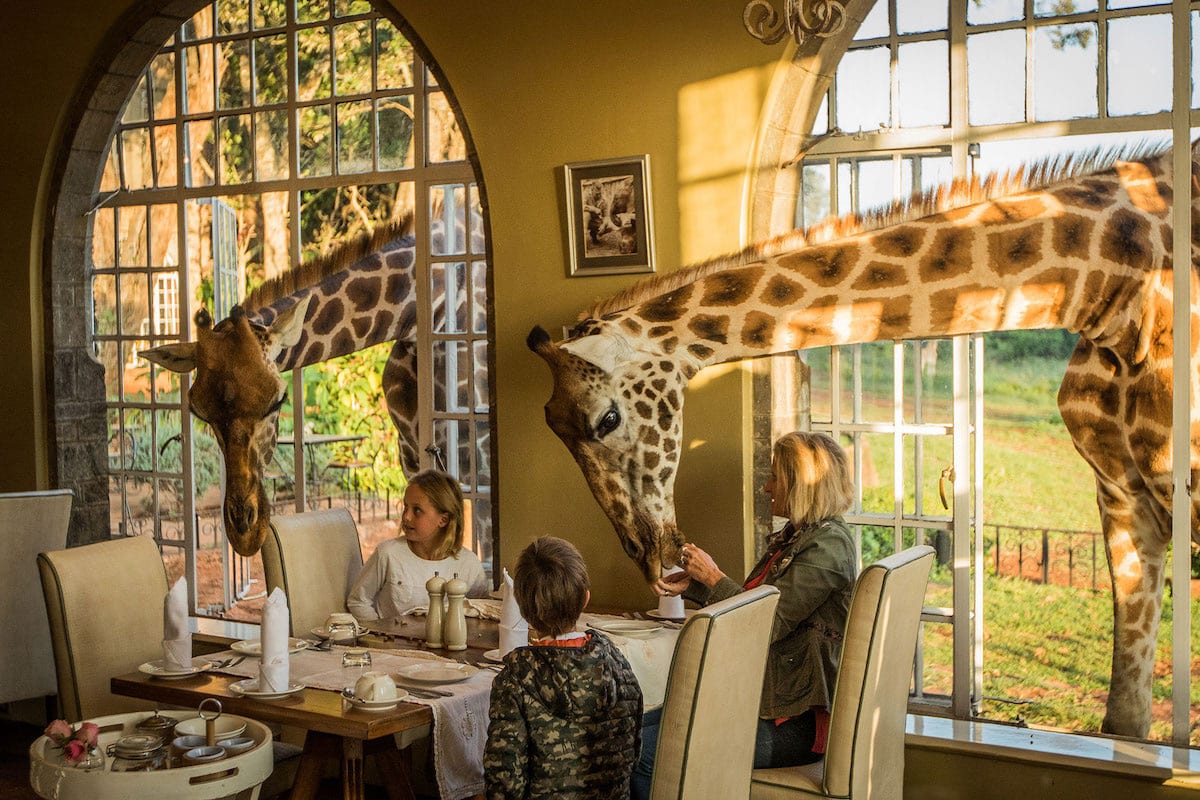
Most visitors arrive and depart through Nairobi and the city deserves at least a full day rather than a transit. The Giraffe Centre at the African Fund for African Wildlife Foundation allows you to hand-feed Rothschild giraffes from eye level. The David Sheldrick Wildlife Trust rehabilitates orphaned baby elephants whose morning mud baths are open to visitors. The Karen Blixen Museum occupies the farmhouse at the foot of the Ngong Hills where Out of Africa was set. And Nairobi National Park, just 7 kilometres from the city centre, offers lion, rhino and cheetah sightings against a backdrop of skyscrapers.
Kenya Journeys
Starting points, not scripts. Every Kenya itinerary we build is tailored to you. Use these as inspiration then speak with our specialists.
Best of the Migration
Masai Mara river crossings, Amboseli and hot air balloon over the plains
Kenya's signature Migration circuit, timed for the river crossings in August and September. Game drives in both the private conservancies and the national reserve, a hot air balloon at dawn, Amboseli for Kilimanjaro views and elephant encounters, and a final night in Nairobi.
Classic Kenya Safari
Masai Mara, Laikipia, Samburu and Lake Nakuru in one complete country circuit
The definitive Kenya experience covering four completely different ecosystems and wildlife experiences. From the drama of the Masai Mara to the exclusive walking safaris of Laikipia, the Northern Specials of Samburu and the flamingos of Lake Nakuru, this circuit reveals Kenya's extraordinary breadth and depth.
Kenya Safari and Coast
Masai Mara game drives followed by days at Diani Beach on the Indian Ocean
The classic Kenya combination: big game on the savannah followed by warm Indian Ocean waters, white sand and Swahili cuisine. The Masai Mara is at its most relaxed from January to March, and Diani Beach is warm and clear throughout this period. A 45-minute charter connects the two worlds seamlessly.
Everything You Need to Know
Getting There
Jomo Kenyatta International Airport (NBO) in Nairobi is Kenya's main international gateway. Kenya Airways operates direct flights from London Heathrow, Amsterdam, Paris and across Africa. British Airways flies direct from London. Emirates, Qatar Airways and Ethiopian Airlines route through their respective hubs.
All visitors to Kenya require a Kenya eTA (Electronic Travel Authorisation). Apply at etakenya.go.ke before departure. The eTA costs USD 30 for most nationalities and is valid for 90 days. Do not arrive without it as processing at the airport is slow. Internal safari flights operate from Wilson Airport, a 20-minute drive from JKIA.
Health and Vaccinations
Yellow fever vaccination is recommended for most parts of Kenya (though not technically mandatory for entry). Malaria prophylaxis is strongly recommended for all safari destinations including the Masai Mara, Samburu, Tsavo and the coast.
Additional recommended vaccinations include typhoid, hepatitis A and tetanus. Kenya has good medical facilities in Nairobi and medical evacuation insurance is strongly recommended for remote safari areas. Flying Doctors (AMREF) provides air evacuation coverage across East Africa and is worth including in your safari package.
Money and Payments
The Kenyan Shilling (KES) is the local currency. USD is widely accepted at lodges, camps and most tourist services. Post-2009 USD bills are preferred and older or damaged notes are frequently refused. Credit cards are accepted at most lodges and Nairobi hotels and restaurants.
ATMs are widely available in Nairobi. M-Pesa, Kenya's mobile money system, is ubiquitous for local transactions. Tipping is customary: USD 10 to 20 per driver-guide per day, USD 5 to 10 per day for camp staff. Some camps include gratuities in their rates.
What to Pack
For game drives: neutral colours (khaki, olive, beige, brown). Avoid blue which attracts tsetse flies. Long sleeves and trousers for early morning drives which can be cold at altitude. A fleece or light jacket for pre-dawn starts. Sunscreen, wide-brim hat and polarised sunglasses are essential.
For photography: a 100-400mm zoom lens minimum, a beanbag to rest on the vehicle windowsill, spare batteries and memory cards. For the coast: light cotton clothing, reef shoes for snorkelling, and high-factor waterproof sunscreen.
Climate
Kenya's climate varies significantly by altitude and region. Nairobi at 1,700 metres is pleasantly warm year-round at 18 to 26 degrees Celsius. The Masai Mara at 1,500 metres is similar but windier and cooler at night. Samburu and Tsavo in the lowlands are hotter at 25 to 35 degrees.
The Kenyan coast is hot and humid year-round at 28 to 32 degrees. Rainfall patterns are complex: the long rains run April to June, the short rains October to November. Altitude parks like the Aberdares can be cool and wet at any time of year. Pack layers for the savannah regardless of season.
Practical Information
Kenya uses British-style Type G plugs (square three-pin) at 240V. Bring a universal adaptor. Most lodges have reliable charging but remote camps may only have generator power for set hours.
Safaricom's M-Pesa network provides excellent mobile coverage across most of Kenya including safari areas. Local SIM cards are available at the airport. WiFi at lodges varies from reliable to non-existent in remote locations. Safari etiquette: remain in the vehicle during game drives unless instructed by your guide, keep noise levels low near wildlife, and never throw anything from the vehicle.
Where You Will Stay
Angama Mara
Suspended above the Rift Valley on the escarpment where Out of Africa was filmed, Angama Mara's tented suites look out over one of the most extraordinary views in Africa: 35 kilometres of Mara plains stretching to the Tanzanian border.
andBeyond Bateleur Camp
Hidden in the Olare Motorogi Conservancy bordering the Masai Mara, Bateleur occupies an exclusive private concession with off-road access, night drives and walking safaris unavailable in the national reserve.
The Giraffe Manor
The most photographed hotel in Africa. A resident herd of Rothschild giraffes pokes their heads through first-floor windows at breakfast in this Edwardian manor house in Karen, Nairobi. An unforgettable first or last night on any Kenya safari.