

How Far in Advance Should You Book Serengeti River Crossing Camps?
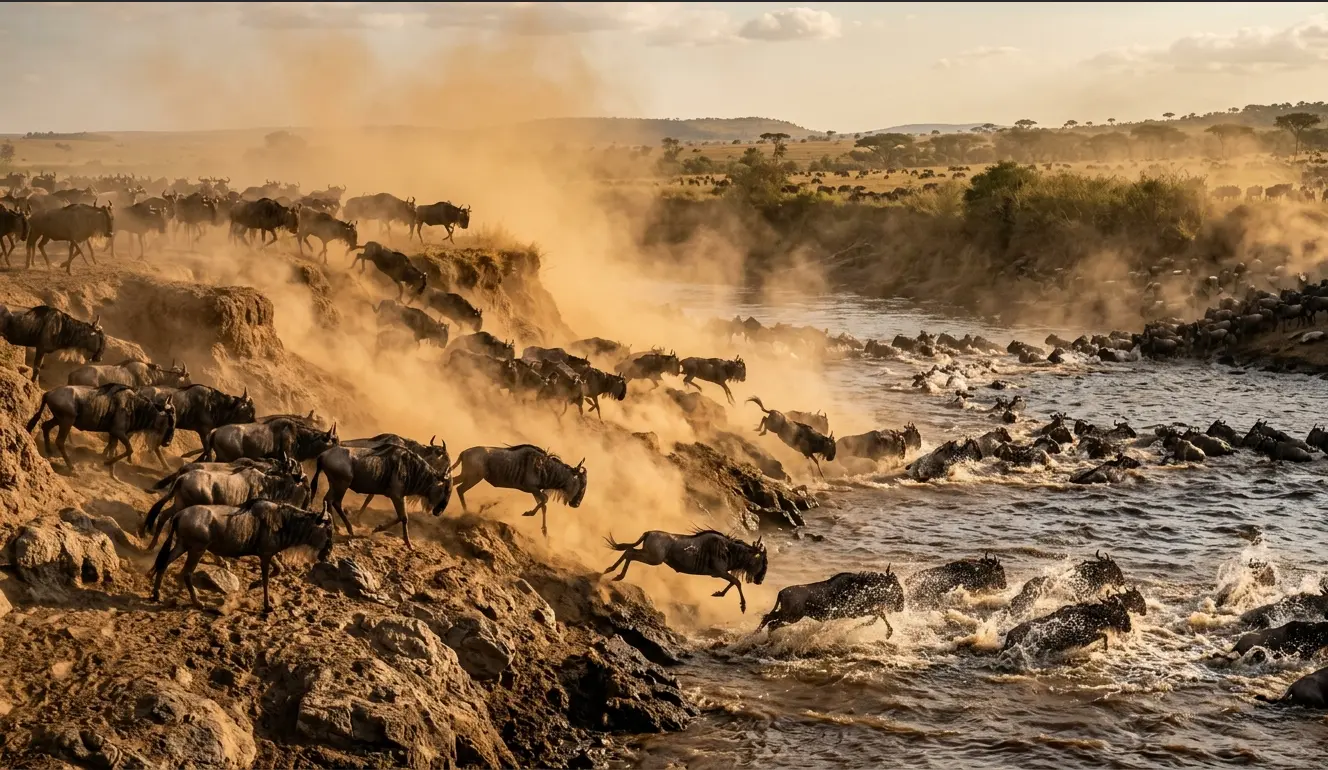
Securing a front-row seat to the dramatic Mara River crossings in the northern Serengeti is the absolute holy grail of wildlife travel. Watching tens of thousands of wildebeests hesitate on rocky cliffs before plunging into crocodile-infested currents is an intense, heart-stopping spectacle.
To secure prime positioning at the top-tier luxury river crossing camps in the northern Serengeti, you must book 12 to 14 months in advance for the peak July–October window. If you require specialized multi-room family villas, exclusive private concession camps, or private vehicle buyouts for the 2027 or 2028 migration seasons, locking in your reservations 14 to 18 months prior to departure is highly recommended to beat the global inventory bottleneck.
When to Book Serengeti
River Crossing Camps
The 2027–2028 Luxury Guide
There is a moment on the banks of the Mara River that no photograph quite prepares you for. The dust hangs gold in the early light. Thousands of wildebeest press towards the water, stop, turn back, gather again. The noise is constant a low, restless grunting that carries across the plains. Then a single animal steps off the bank, and within seconds the river is full of bodies, spray and urgency.
For many travellers, witnessing that moment is the reason to come to Tanzania at all. And the place to witness it is the Northern Serengeti, a remote and beautiful stretch of the park where the Mara River curves towards the Kenyan border. It is also a place with relatively few camps, short peak seasons and a great deal of international demand which is why the question we hear most often at Savannah Explore Africa is not whether to go, but when to book.
This guide answers that question properly. It explains how the migration actually moves, what happens at the river, where the camps sit and why they fill so early, how long you should stay, and how to plan a 2027 or 2028 journey that gives you the best possible chance of standing on that riverbank at the right time.


9–12 Months Ahead for Peak Season Travel | 12–18 Months Ahead for August or a Named Luxury Camp | 3+ Nights Recommended in the Northern Serengeti | Jul–Oct Typical Northern Crossing Season Never Fixed |
|---|
Booking Lead Times at a Glance
Use this as your planning compass. These are practical guidelines rather than booking rules; availability always depends on the camp, the dates and the suites you need.
Travel Window | Book Ahead | What to Know |
|---|---|---|
Late June – Early July | 9–12 months | Herds may be moving north; timing varies year to year |
July | 9–12 months | Demand rises as the herds approach the Mara River |
August | 12–18 months | The most sought-after month for river crossings |
September | 9–12 months+ | Strong demand; herds may be split between Tanzania and Kenya |
Early October | 6–12 months | A quieter, more variable window in the north |
Signature Luxury or Mobile Camps | 12–18 months+ | Very few suites for the prime dates |
Families & Private Groups | 12 months+ | Several suites must be free at the same camp |
Flexible Travellers | 3–6 months | Possible, but expect limited choice; preferred camps may be full |
Understanding the Great Migration Before You Book
The Great Migration is often described as an event, as though it happens on a particular day. In reality it is a continuous, year-round journey. Well over a million wildebeest, accompanied by hundreds of thousands of zebra and gazelle, move in a vast loop through the Serengeti in Tanzania and the Maasai Mara in Kenya, following the rain and the fresh grass it brings.
Understanding that loop is the key to understanding why booking matters, because the herds only reach the Mara River for part of the year and that part of the year is when everyone wants to be there.
The southern plains: calving season
Early in the year, the herds gather on the short-grass plains of the southern Serengeti, around Ndutu and the borders of the Ngorongoro Conservation Area. The grasses here are rich in minerals after the short rains, and it is here that the wildebeest give birth, hundreds of thousands of calves arriving within a few weeks of one another. Predators gather too, and this season has a drama of its own but it is a very different experience from the river.
Moving west and north
As the plains dry out, the herds begin to move. Through the middle months of the year they push west and north, many travelling through the Western Corridor, where they meet their first serious river, the Grumeti. By mid-year the leading columns are heading towards the Northern Serengeti, drawn by the longer grass and permanent water that the north provides through the dry season.
The north and the Mara River
From around July, and in some years a little earlier, the herds begin to reach the Mara River. For the following weeks and months they move back and forth across it not once, but repeatedly as they respond to grazing and rain on either side. This is the season of the famous crossings, and the reason demand for northern camps peaks between July and September.
The return south
As the short rains begin towards the end of the year, the herds turn south again, moving through the central Serengeti back towards the southern plains, where the cycle begins once more. By then, the Mara River is quiet again.
The migration is not a show with a start time. It is a living journey, and the river is only one chapter of it."
Why the Finest Northern Serengeti Camps Sell Out Early
The Northern Serengeti is one of the least developed parts of the park, and that is a large part of its appeal. There are no large hotels here, and no town. Instead, a relatively small number of camps and lodges are scattered across a wide, remote landscape. Many of the most sought-after properties have only a handful of tents, which means a single family booking can fill a camp for the week.
Demand, meanwhile, is concentrated into a few short months. The crossing season coincides with summer holidays across Europe and North America, and the same weeks are on the wish list of photographers, honeymooners and multi-generational families from around the world. Tanzania's tourism authority itself highlights July to September as the most popular time for travellers hoping to see the crossings.
Some of the most atmospheric options are seasonal or mobile camps, which open only for the migration months or move to different areas of the Serengeti through the year. Because they operate for a limited period, the number of nights they can sell in the north is small and those nights tend to be reserved by travellers who planned furthest ahead.
Finally, a Northern Serengeti safari is never just a room. It needs light-aircraft seats on the right days, transfers from the airstrip, private vehicles and guides, and usually accommodation elsewhere in Tanzania before or after. When all of these pieces are booked early, they can be chosen to fit one another. When they are booked late, the journey is assembled around whatever is left.
Intimate Camps, Very Few Suites | Demand Concentrated in a Few Months |
|---|---|
Many of the region's most celebrated properties hold only a handful of tents. A small camp can be full for a prized August week while larger lodges elsewhere in the Serengeti still have rooms. | July to September aligns with northern-hemisphere summer holidays and the peak of Mara River activity. Tanzania's tourism authority highlights these months as the most popular for crossing safaris and the best-placed camps feel it first. |
Seasonal and Mobile Camps | Seamless Logistics Take Time |
|---|---|
Some camps operate only during the migration months, or reposition through the year. Their settings can be exceptional, but their operating dates are short and their inventory small. A "migration camp" is not necessarily beside the crossing point the herds favour during your stay. | A refined journey aligns international flights, light-aircraft connections, airstrip transfers, private vehicles and guides, other parks, and family or honeymoon arrangements. Booking early lets every element be chosen rather than settled for. |


Month by Month: When to Book for Each Season
Because the migration responds to rainfall, its timing shifts from year to year. What follows describes typical patterns rather than predictions but it reflects how we advise travellers on lead times for each part of the northern season.
The Northern Serengeti Season Booking Strategy |
|---|
Jun – Early Jul :The journey North In these weeks the herds are often still moving through the Western Corridor or making their way north. In some years the first groups reach the Mara River early; in others they arrive later. The north can feel quieter and more exclusive at this time, which some travellers greatly enjoy. If you travel now, think of a crossing as a wonderful bonus rather than the sole measure of the trip, and begin planning around 9–12 months ahead if you want a specific camp. July : the northern journey begins By July the herds are usually arriving in the north in growing numbers, and crossings become more likely as the month progresses. Early crossings can be sporadic, and the first arrivals at the river do not always cross immediately. July is increasingly popular, particularly with families travelling in the school holidays, so 9–12 months ahead is the sensible starting point. August : the most coveted month August is the month most travellers ask for, and for good reason: in most years the herds are well established in the north and crossings can be frequent. It is also the month in which the best-located camps are hardest to secure. If you are tied to particular dates, want a specific property or need several rooms, begin 12–18 months ahead. If your dates can move by a few days, tell your planner — small adjustments can open up far more options. September: rich activity and shifting herds Crossings often continue strongly into September, but by now the herds may be spread across both sides of the border, with some in Kenya's Maasai Mara and some in Tanzania. A camp perfectly positioned in July may be less ideally placed late in the month, so location deserves careful thought. Begin planning 9–12 months ahead, and earlier for a particular camp. October :a quieter, more variable month As the short rains approach, some herds begin drifting south while others linger in the north. October can still bring crossings, and the north is often quieter, but the picture becomes less predictable. Many travellers combine a northern camp with a central Serengeti camp at this time to cover both possibilities. Allow 6–12 months for luxury properties. If you are flexible and simply hope to travel during the season, it is sometimes possible to plan with only three to six months' notice. Be prepared, though, for the most sought-after camps to be full and for your planner to suggest alternatives. |
Why No One Can Guarantee a Mara River Crossing
The Great Migration is a living process, not a performance. Wildebeest and zebra move across the Serengeti–Mara ecosystem in response to rainfall, grazing and water year round, and never on a fixed schedule.
A crossing may happen on your morning drive, the week before you arrive, or at a stretch of river miles away. Herds can mass on the bank for days, approach the water, turn back and return. Even the most experienced guides cannot say when they will commit.
That is why no responsible operator promises a crossing on a given date. What we can do is stack the odds in your favour: the right seasonal window, the right location, enough nights, and a guide free to follow the latest sightings.
Where to Stay for the Mara River Crossings
Choosing where to stay is the single most important decision in planning a crossing safari more important, in many ways, than choosing which camp. Two properties can both describe themselves as "Northern Serengeti" and yet offer very different days in the field, depending on how far they sit from the river and which crossing points they can reach easily.
Kogatende
Kogatende is the main gateway to the Northern Serengeti, home to an airstrip and a ranger post, and sits close to the southern bank of the Mara River. Several of the best-known crossing points lie within reach, which makes camps in the wider Kogatende area a natural base during the season. The trade-off is that its popularity can bring more vehicles to the river at peak times something a good guide will manage by timing and positioning.
Lamai
North of the Mara River, between the river and the Kenyan border, lies the Lamai area, sometimes called the Lamai Wedge. It is wilder and more remote, with dramatic rocky hills and a strong sense of isolation. When the herds are on this side of the river, camps here can be superbly placed. Whether Lamai suits your dates depends on where the herds are concentrated and on how easily a camp can reach the crossing points.
Why exact location matters more than labels
When you compare camps, look past the marketing description and ask practical questions. How long is the usual drive to the main crossing points? Is the camp open, and in this location, on your exact dates? Are game drives private or shared, and can they run all day by the river with a packed lunch? How experienced is the guiding team in reading the herds? These answers tell you far more about your days in the north than a camp's photographs.
And remember that even the best-placed camp only gives your guide the opportunity to be in the right place. It does not decide where the herds will cross.
Six Questions to Ask Before Choosing a Camp |
|---|
|


Choosing the Style of Camp That Suits You
Accommodation in the Northern Serengeti falls broadly into three styles, and each offers a different kind of experience.
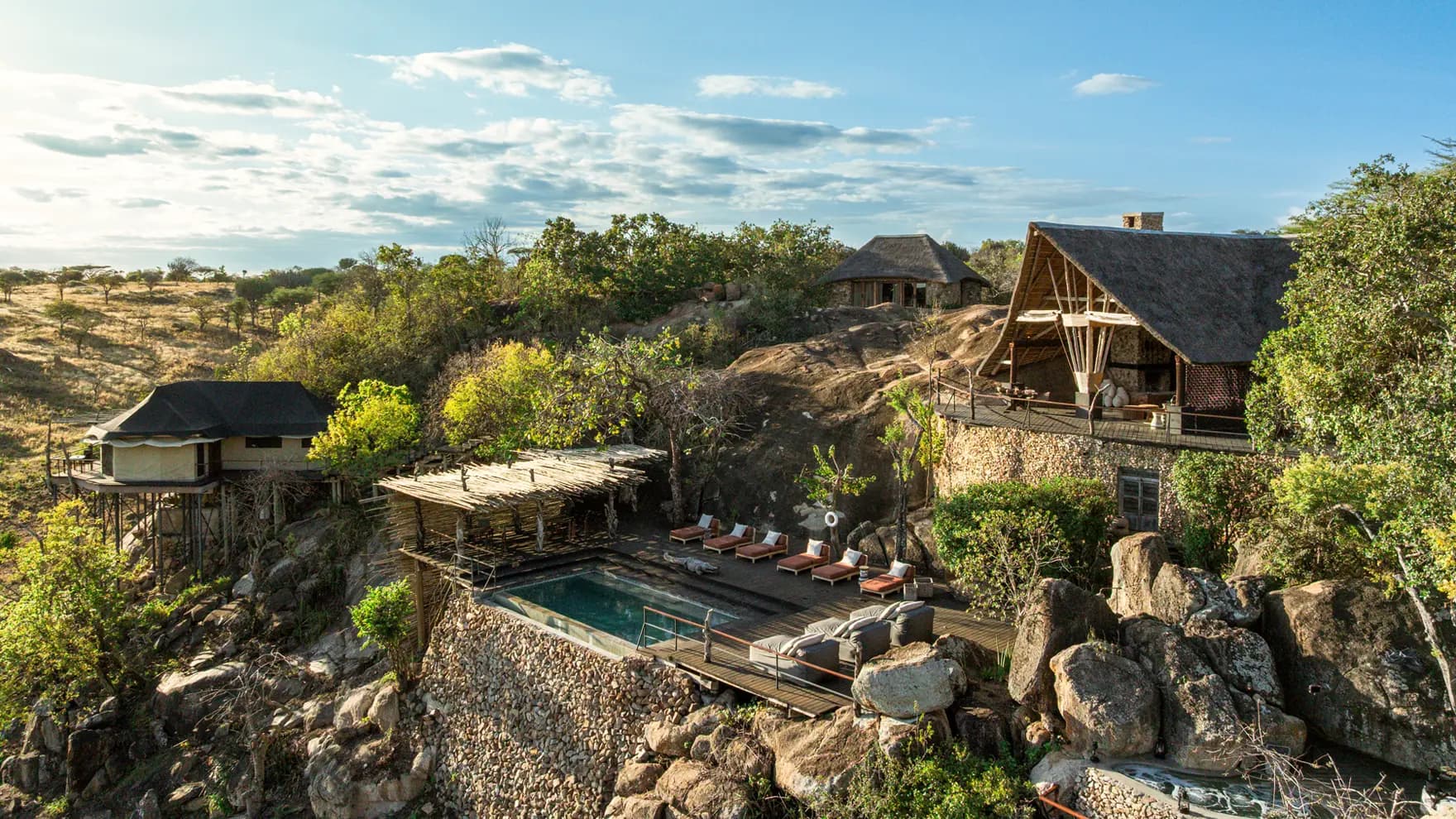
Permanent lodges and tented camps are built to stay in one place year round. They tend to offer the most established comforts generous suites, en-suite bathrooms, swimming pools at some properties, refined dining and polished service. They suit travellers who value space and amenities, and those combining the north with several other destinations. The important question is simply whether their fixed location suits your particular week.
Seasonal camps open only for the months when the herds are expected in the north. Because they exist for the migration, they are often positioned with the crossings in mind, and they can offer a wonderful balance of comfort and atmosphere. Their operating dates are limited, so they are often among the first to fill.
Mobile tented camps move between different parts of the Serengeti through the year. They are usually intimate, with a strong focus on the safari itself, and many guests love the feeling of being properly in the wilderness. It is worth asking exactly how and how often a mobile camp moves: few relocate in real time with the herds, and most follow a planned seasonal pattern.
There is no single best choice. A honeymooning couple may value privacy and a beautiful suite above all; a photographer may care most about a private vehicle and a guide willing to stay out from dawn to dusk; a family will need connecting rooms and a camp that welcomes children. The right camp is the one that fits your priorities and sits in the right place for your dates.


How Long to Stay in the North
For a safari centred on the crossings, we recommend at least three nights in the Northern Serengeti, and four or five if the crossings are your main reason for travelling.
The reasoning is simple. Herds can wait at the river for a day or more before crossing, and a crossing can happen at any time of day. With only one or two nights, you might have a single full day by the river — and if the herds choose not to cross, there is no second chance. Three nights give you two or three full days, enough for your guide to follow the latest sightings, try different stretches of river and wait patiently when the herds are building.
Four or five nights allow a slower, more immersive rhythm. You can spend a full day at the river and a morning exploring elsewhere, follow the predators that shadow the herds, or simply enjoy the north without the pressure of a schedule. Photographers, in particular, benefit from the extra time. More nights do not guarantee a crossing, but they turn your chances from hopeful to genuinely good.
When Your First-Choice Camp Is Already Full
Finding that your preferred camp is fully booked rarely means abandoning the plan. The first step is to separate what matters most from what can flex.
Often the simplest solution is another camp in the same area. Judged on its location, its guiding and its access to the river, an alternative can deliver an equally rewarding stay. If your dates have some flexibility, moving your stay by just a few days can open up several new options and this is far easier before international flights are booked.
Some travellers split their time between two camps, perhaps one near Kogatende and one in Lamai, which can also broaden the areas you can reach. This adds a transfer, so it works best when the two locations genuinely complement each other. And sometimes the right answer is to reshape the wider itinerary — changing the order of parks or the number of nights in each so that it fits around the northern camps that are available.
What Shapes the Cost of a Migration Safari
The cost of a Northern Serengeti safari depends on the camps you choose, the time of year, the length of your stay, how you travel between regions and the level of private service you would like. Peak migration months command peak rates, and the most exclusive camps are priced accordingly.
Rather than comparing advertised starting prices, we encourage travellers to look at a complete quotation. That should include accommodation and meal plans, national park and conservation fees, light-aircraft flights or road transfers, guiding and vehicle arrangements, and every other destination on the itinerary. Seeing everything together is the only way to understand the true cost and to see where your budget makes the greatest difference.
Booking early rarely makes a safari cheaper. What it does is give you choice: of camps, of suite categories and of dates. For most of our travellers, the best value lies not in the lowest nightly rate but in the right combination of location, guiding and time in the field.
Getting to the Northern Serengeti
The north is remote, and how you reach it shapes your whole journey. Most luxury travellers fly in on scheduled light-aircraft services from Arusha or from other airstrips in the Serengeti, landing at Kogatende or a nearby strip and continuing to camp by vehicle. The flights are short and often beautiful, and they turn what would be a long road journey into a morning's travel. The main practical consideration is luggage: light aircraft usually require soft-sided bags within a strict weight limit.
Travelling by road is possible and suits those with more time who enjoy the journey itself. The drive from the central Serengeti to the north can take much of a day, depending on the route, the condition of the tracks and how often you stop for wildlife. For travellers with a limited number of days, flying in usually means more time at the river.


Building the Wider Tanzania Journey
Few travellers fly to Tanzania for the Northern Serengeti alone, and the north combines beautifully with the country's other great landscapes.
The central Serengeti is known for its resident lions, leopards and cheetahs, and offers excellent game viewing at almost any time of year. It pairs especially well with the north in October, when the herds may be moving between the two. The Ngorongoro Crater, a vast volcanic caldera filled with wildlife, provides a dramatic change of scenery, while Tarangire National Park, with its elephant herds and ancient baobabs, is at its best in the dry season. And for many travellers, a few days on the beaches of Zanzibar make the perfect, unhurried end to a safari.
The one principle we hold to is this: if the crossings are your reason for travelling, never cut short your time in the north to fit in another stop. It is far better to see fewer places well than many places briefly.
How to Plan Your 2027 or 2028 Safari
The most reliable way to plan a migration safari is to begin with the fixed points and build outwards.
Start with your travel window: the month you would like to go and how flexible your dates can be. Next, decide what kind of journey you want a romantic escape, a family adventure, a photographic safari or a wider exploration of Tanzania because this shapes the style of camp and the guiding you need. With those in place, your planner can check availability at the camps that suit your dates and priorities, along with sensible alternatives.
Once the northern camps are held, the rest of the route can be designed around them: how many nights in the north, which other parks to include and how to travel between them. Then review the full quotation carefully, including deposits, payment schedules and cancellation terms. Only once all of this is secure should international flights be booked never the other way around.
Watching the Crossings Responsibly
At the height of the season, a crossing can draw many vehicles to the same stretch of river. How those vehicles behave matters. Animals that are crowded or blocked from their path may abandon a crossing, or panic in ways that cause unnecessary deaths.
Responsible viewing means keeping a respectful distance from the bank, never blocking the herds' approach or exit, staying on permitted tracks and following park rules even when a better photograph might be possible by breaking them. When you choose an operator, ask how their guides handle busy crossings. The best guides are as proud of their patience as of their sightings.

Plan Your Mara River Safari
Tell us your travel month, who is travelling and the kind of journey you have in mind. We will design your migration safari from the fixed points outward the right camp first, and enough time at the river to let the herds do the rest.
Begin Your Journey
Your story starts
in East Africa.
Tell us your dates, your dream, and how you like to travel. We will design something extraordinary, only for you.