
7 Day Tanzania Great Migration Safari
There is a profound moment, somewhere along the rugged ridges of the northern Serengeti between July and October, that no amount of digital preparation can make predictable. The sound reaches you long before the sight does a deep, continuous, visceral percussion of hundreds of thousands of hooves, heavy breath, and kinetic movement rising from the banks of the Mara River.Executing a flawless 7-day Tanzania Great Migration safari luxury itinerary is an exercise in absolute geographic and operational precision. Because the herds follow real-time weather cells rather than travel brochures, a poorly sequenced trip can leave you stranded in empty dust bowls, enduring 6-hour road transits away from the action. At Savannah Explore Africa, we replace logistical guesswork with bulletproof luxury insulation. By combining 100% private bush aviation, exclusive 4x4 land cruiser command, and elite low-density forest and plain enclaves
The ultimate 7-day luxury Tanzania Great Migration safari is structured as a 100% fly-in itinerary operating between July and October to capture the high-stakes Mara River crossings. The strategic baseline sequences 1 night in Arusha, 3 nights in the northern Serengeti (Kogatende/Lamai Wedge) for uninterrupted river stakeouts, 1 night in the central Serengeti for high-density big cat interactions, and 1 night in the Ngorongoro Crater Highlands for unparalleled Big Five density. Bypassing overland road fatigue via private bush planes saves two full days of travel time, maximizing every tracking loop.
7-Day Tanzania
Great Migration Safari
A Luxury Itinerary for 2026
Northern Serengeti · Mara River · Ngorongoro Crater · Private Game Drives · Fly-In Throughout
Recommended Departure Window: July – October 2026 · Alternative: January – March Calving Season
There is a moment, somewhere in the northern Serengeti between July and October, that no amount of preparation makes predictable. The sound reaches you before the sight does a low, continuous percussion of hooves and breath and movement that rises from the direction of the river. Then you see them: the leading edge of the column, pressing toward the bank, the animals at the front checking and retreating and checking again while the pressure of hundreds of thousands of animals behind them builds until it becomes irresistible. And then they go.
A seven-day Tanzania Great Migration safari is designed around exactly this possibility not the guarantee of a crossing, because no honest operator offers guarantees about wild animals, but the intelligent positioning that gives you the best possible chance of being in the right place when it happens. This itinerary concentrates its time in the northern Serengeti during the peak July–October window, adds a day of central Serengeti exploration, and concludes with the Ngorongoro Crater one of the most concentrated wildlife ecosystems on earth before departure.
The alternative calving season itinerary for January–March travellers is provided at the end of this guide.
"Seven days in Tanzania, properly planned, delivers more extraordinary wildlife encounters than most two-week safaris built around a fixed lodge in the wrong location at the wrong time of year."

Safari Overview
7-Day Private Tanzania Great Migration Safari
Duration 7 Days · 6 Nights | Country Tanzania | Safari Style Private Luxury · Fly-In | Start / End Kilimanjaro / Arusha |
|---|
Arusha→Northern Serengeti (3 nights)→Central Serengeti (1 night)→Ngorongoro Highlands (1 night)→Departure
The Itinerary Day by Day
Day One 01 Arrive Tanzania — Arusha Kilimanjaro International Airport · Private Welcome · Rest & Orientation |
|---|
International arrival at Kilimanjaro International Airport (JRO). Your private Savannah Explore Africa representative meets you at arrivals passport in hand, name board visible, transfer vehicle waiting and transfers you to your accommodation in or around Arusha. No shared shuttle. No waiting for other passengers. The safari begins at the arrivals gate. Arusha is Tanzania's safari gateway a vibrant, manageable city at the foot of Mount Meru, surrounded by coffee farms and highland greenery. Depending on your arrival time, the afternoon can be spent resting at the lodge, exploring the town, or joining an optional cultural excursion to a local market or community project. Your guide will conduct a detailed safari briefing over dinner covering the migration's current position, the following day's flight logistics, and what the next six days will hold. 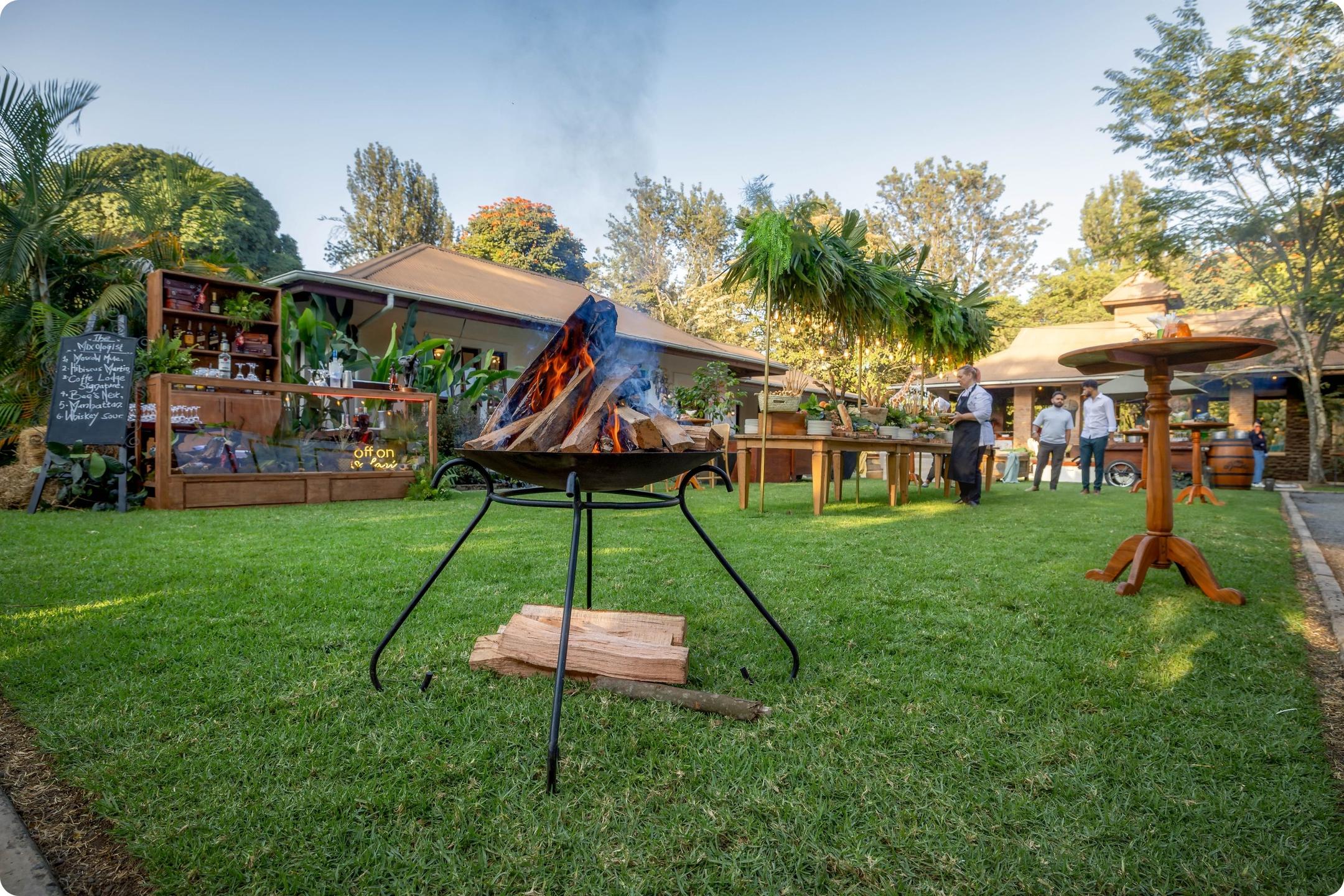 Day Highlights
Overnight; Quality lodge in or near Arusha selected based on proximity to the departure airstrip and overall comfort standard |
Day Two 02 Fly to Northern Serengeti First Game Drive Kogatende Airstrip · Mara River Ecosystem · Migration Tracking Begins |
|---|
After an early breakfast, transfer to Arusha Airstrip for your scheduled or charter bush flight to Kogatende in the northern Serengeti approximately 50 to 75 minutes of aerial views across the Serengeti ecosystem that serve as the finest possible introduction to the landscape below. The flight alone justifies the decision to fly in rather than drive: the scale of the Serengeti, visible from above in its entirety, is something no road transfer can convey. Your private guide and 4x4 safari vehicle meet you on the tarmac. There is no lodge check-in queue, no shared vehicle allocation simply your guide, your vehicle, and the beginning of your migration safari. Depending on the latest ground reports of herd movements, your afternoon game drive may take you toward the Mara River's crossing points, the Lamai Wedge, or the wide plains where the wildebeest column is currently advancing. The northern Serengeti in peak migration season is alive in a way that no other landscape on earth quite matches. 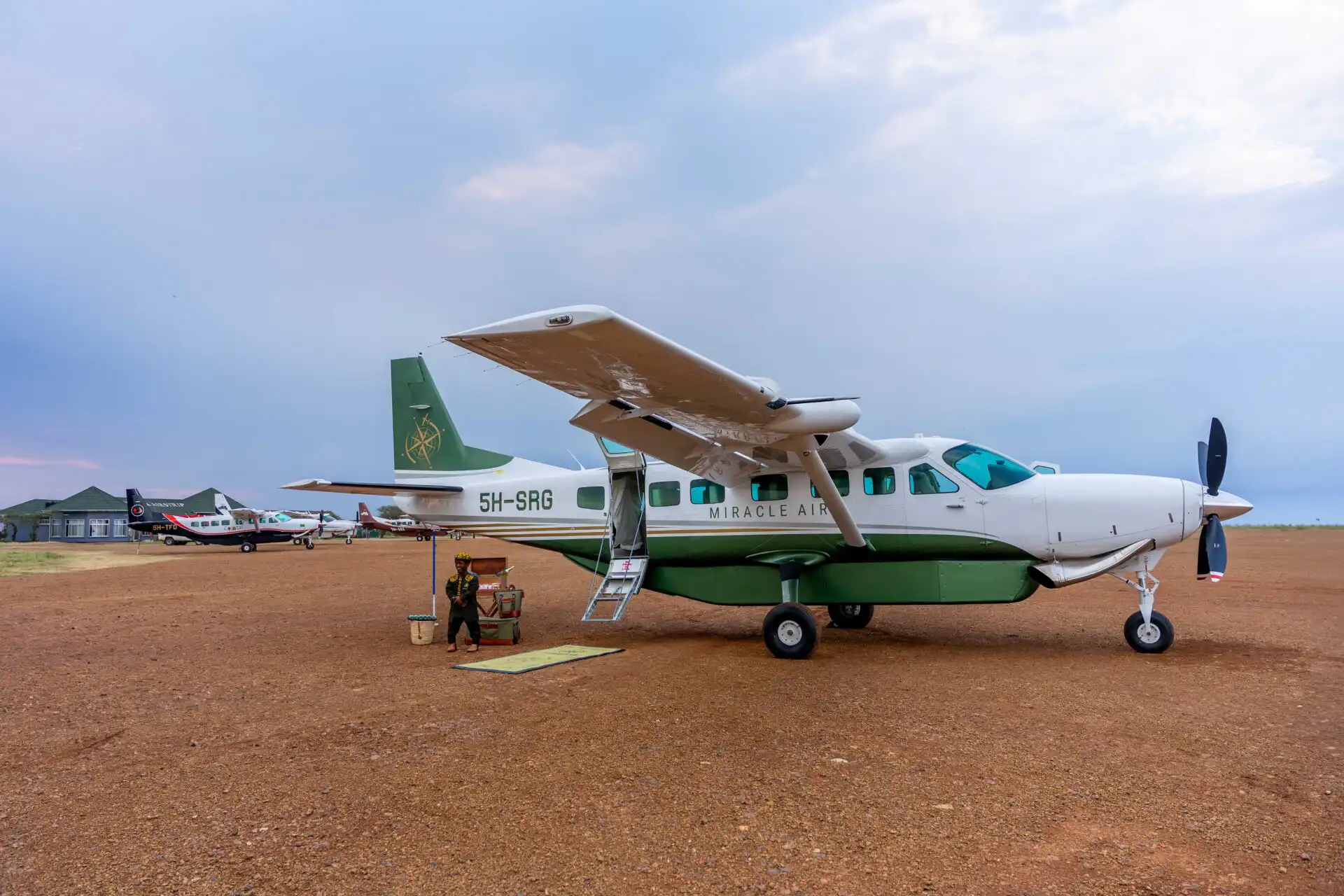 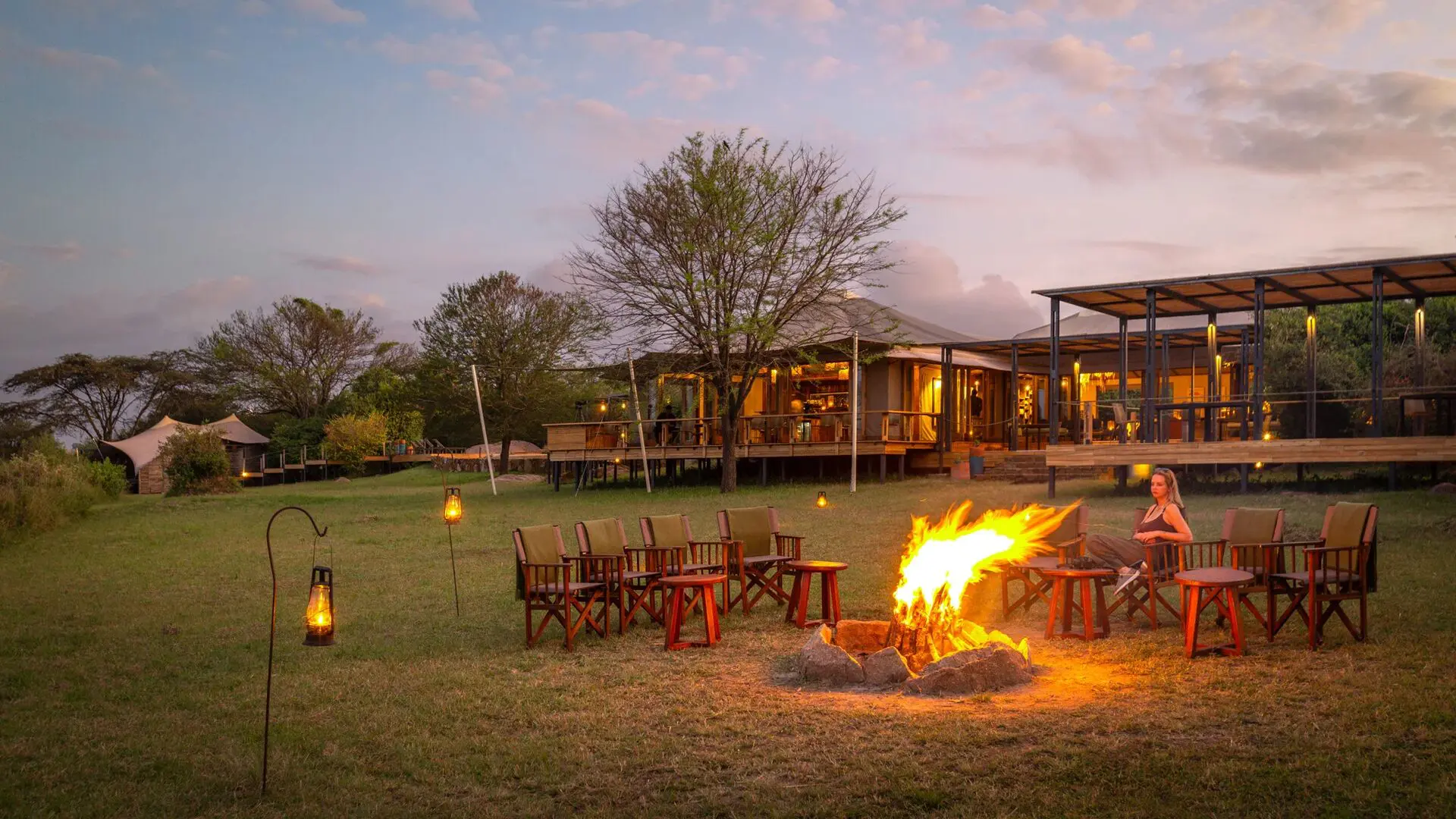 Day Highlights
Overnight; Luxury tented camp, northern Serengeti Kogatende area or Lamai, selected for proximity to peak migration activity |
Day Four 04 Northern Serengeti A Third Migration Day Depth Over Distance · Sundowner on the Plain · Final Northern Drive |
|---|
The most common mistake in migration safari planning is staying in a location for one night and then rushing to the next destination. The northern Serengeti rewards those who stay. A third consecutive day in the same migration zone allows your guide to operate with the situational awareness that comes from three days of tracking knowing which crossing points have been active, which lion pride is most reliably visible, which direction the column is moving rather than starting from zero in a new location every morning. Today can be structured around the morning's tracker intelligence: a long drive toward the current focus of migration activity, a return to the camp for a mid-day rest during the heat of the day, and an afternoon excursion timed for the golden hour that the northern Serengeti does with extraordinary beauty. A sundowner on the open plain a cold drink, the canvas of the evening sky, the sounds of the savannah settling into night is one of the quietest, most completely satisfying moments any safari produces.  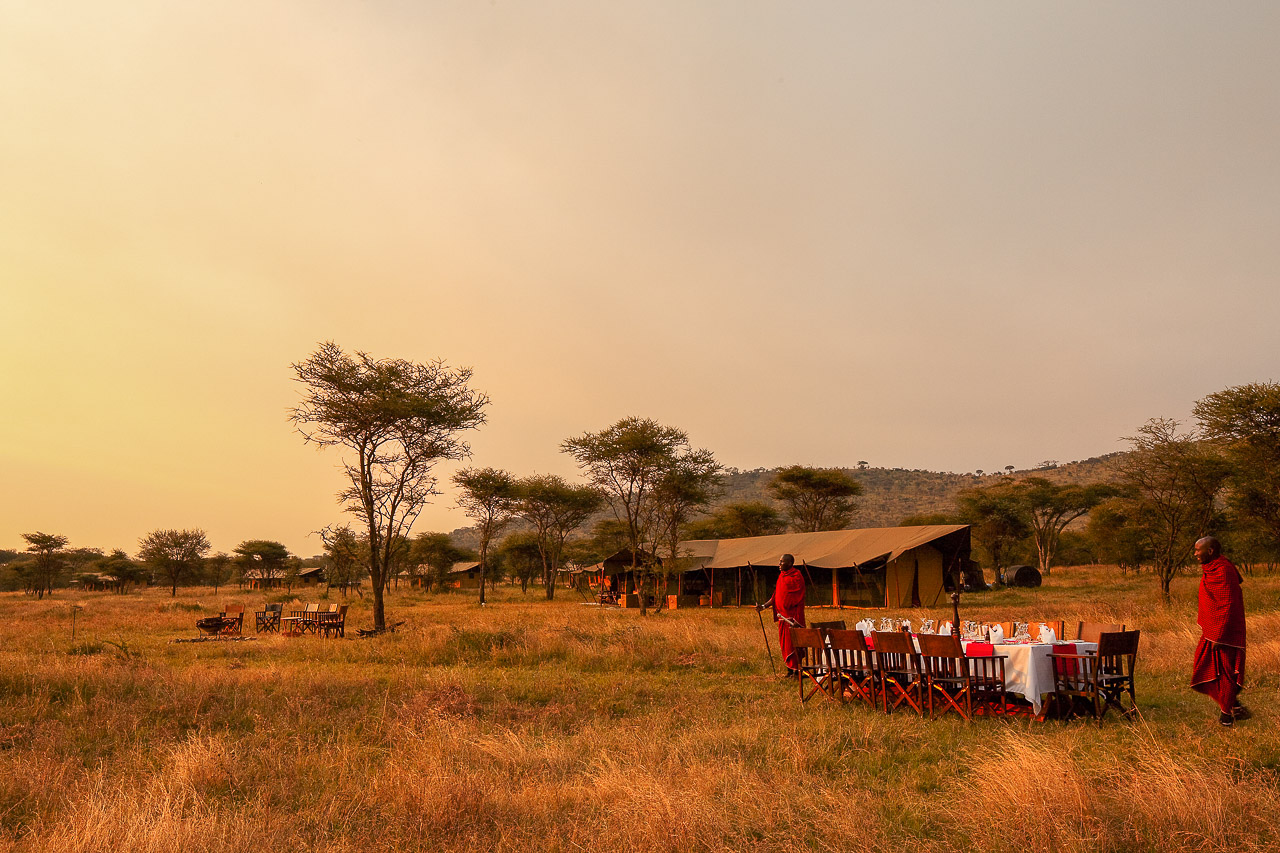 Day Highlights
Overnight;Luxury tented camp, northern Serengeti third and final night before the central Serengeti transition |
Day Five 05 North to Central Serengeti The Iconic Plains Kopjes · Seronera · Resident Predators · Changing Landscape |
|---|
After breakfast, your game-viewing transfer south toward the central Serengeti begins a journey that is itself a wildlife experience rather than a transit. The landscape shifts progressively: the northern Serengeti's open grasslands and river systems give way to the central Serengeti's granite kopjes, the ancient rock formations that punctuate the plains like sculptures and serve as the preferred lookout and resting points of the Seronera lion prides. The central Serengeti is home to some of the most reliably visible resident predators in Africa. The Seronera Valley's lion and leopard populations have been studied and documented for decades and the leopards in particular, which favour the riverine fig trees along the valley floor, are encountered here with a frequency that northern migration camps rarely match. Check in to your central Serengeti property in time for an afternoon game drive that introduces this different character of the Serengeti's landscape. 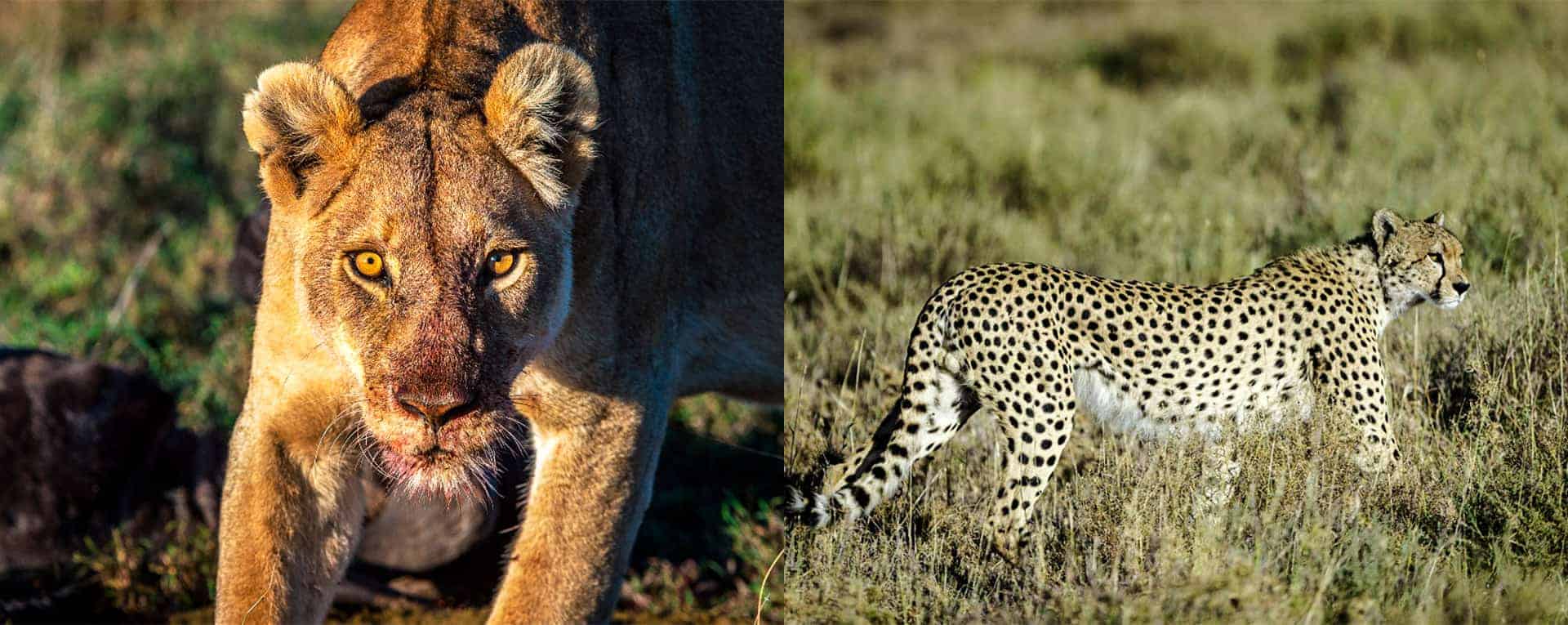  Day Highlights;
Overnight; Luxury lodge or tented camp, central Serengeti Seronera area, selected for predator access and landscape quality |
Day Six 06 Ngorongoro Crater The World's Greatest Wildlife Bowl Crater Descent · Big Five · Black Rhino · Picnic Lunch on the Floor |
|---|
An early departure from the central Serengeti for the two-hour drive to Ngorongoro through the transition landscapes of the Serengeti's eastern reaches and then up into the highlands surrounding the crater rim, where the air cools noticeably and the highland forest closes around the vehicle. The first view of the crater from the rim the entire 260-square-kilometre caldera visible below, wildlife moving as specks across the crater floor is one of the most arresting views in Africa. The descent into the crater begins after this brief orientation. The Ngorongoro Crater is the world's largest intact caldera and supports one of the highest concentrations of large mammals on earth: approximately 25,000 large animals within a self-contained ecosystem from which most species do not leave. The crater floor contains elephants, lions, hippos, buffalo, spotted hyena, golden jackals, flamingos on the soda lake, and with patience and a guide who knows the terrain the endangered black rhinoceros, one of the rarest wildlife encounters available in East Africa. A picnic lunch on the crater floor, with wildebeest grazing fifty metres away, is a meal that no restaurant can replicate.   Day Highlights
Overnight; Luxury lodge on the Ngorongoro crater rim selected for crater views and highland atmosphere |
Day Seven 07 Departure Tanzania Farewell Kilimanjaro International Airport · Optional Morning Extension |
|---|
After a final highland breakfast with crater views, transfer to Kilimanjaro International Airport (JRO) or Arusha Airport depending on your onward itinerary. The drive back through the crater highlands and down through the coffee-farming country toward Arusha takes approximately two to two and a half hours, with a final game-viewing opportunity through the Ngorongoro Conservation Area en route. For travellers with afternoon or evening departures, Arusha offers an unhurried morning: a final coffee, a visit to the Cultural Heritage Centre, or simply time to sit with the memories of a week that most visitors describe as among the most extraordinary of their lives. For those extending into Zanzibar a forty-five-minute flight from Kilimanjaro the transition from savannah to the Indian Ocean's white sand beaches awaits.   Day Highlights
Note ; Zanzibar extension available 4–5 nights recommended; domestic flight connections depart Kilimanjaro or Arusha daily |
When to Travel The Migration Calendar
The itinerary above is designed for the July–October northern Serengeti window. The Great Migration, however, is a year-round phenomenon and the correct itinerary structure changes with the season. The table below maps the migration's annual movement to the experience it delivers each month.
Period | Migration Region | Signature Experience | Itinerary Adjustment |
|---|---|---|---|
Jan – Mar | Southern Serengeti and Ndutu | Calving season 500,000 calves born; extraordinary predator density; cheetah, wild dog, and lion at maximum activity | Fly to Ndutu area; base in southern Serengeti for 3 nights; see alternative calving itinerary below |
Apr – May | Central and Western Serengeti | Herd movement northward; lush green landscapes; fewer visitors; lower lodge rates; good resident predators | Central Serengeti base; fly-in to Seronera; western extension possible |
Jun – Jul | Western Serengeti and Grumeti | Grumeti River crossings begin; massive crocodile concentrations; herd density building in western corridor | Grumeti area accommodation; combine with central Serengeti game drives |
Jul – Oct | Northern Serengeti and Kogatende | Peak Mara River crossings; maximum wildebeest and zebra density; peak predator activity alongside herds | This itinerary 3 nights northern Serengeti, Kogatende area |
Nov – Dec | Central and Southern Serengeti | Return movement south; good resident predators; fewer vehicles than peak season; excellent photography light | Central Serengeti base with southern day excursions; lower rates and quieter parks |
These are seasonal patterns, not guaranteed schedules. Rainfall variation can shift the migration's timing by several weeks in either direction. Savannah Explore Africa monitors ground reports continuously and adjusts accommodation recommendations based on current herd positions not historical averages alone.
Alternative: 7-Day Calving Season Safari January to March
Tanzania's calving season is one of East Africa's most extraordinary and consistently underestimated wildlife events and for the traveller who cannot travel between July and October, it offers an experience of equivalent drama through an entirely different lens. Up to 500,000 wildebeest calves are born within a few weeks of each other on the short-grass plains of the Ndutu area, drawing predator concentrations of extraordinary density. The wild dog packs of the southern Serengeti are most reliably seen during this period; cheetah activity peaks; and the Ndutu lake system draws exceptional bird life alongside the mammal spectacle.
7-Day Calving Season Alternative Ndutu & Southern Serengeti |
|---|
Day 1 ; Arrive Kilimanjaro Arusha Private airport welcome; lodge check-in; safari briefing; early dinner. Day 2 Fly to Ndutu / Southern Serengeti Bush flight to Ndutu airstrip; afternoon game drive across the calving grounds. First wildebeest calves and predator sightings. Days 3–4 Ndutu Calving Season Game Drives Two full days dedicated to the calving grounds. Cheetah, lion, hyena, jackals, and wild dog hunting among the newborn calves. Short-grass plains allow exceptional open visibility some of the best wildlife photography conditions of the year. Day 5 Central Serengeti Kopjes and Resident Predators Transfer north to the central Serengeti. Kopje landscape, Seronera Valley leopards, and the resident lion prides of the world's most studied savannah ecosystem. Day 6 Ngorongoro Crater Full-day crater floor game drive. Black rhinoceros search, flamingos on Lake Magadi, elephant, lion, and spotted hyena. Picnic lunch on the crater floor. Day 7 Departure Highland breakfast; transfer to Kilimanjaro International Airport. Optional Zanzibar extension departure available from KIA. |
What Is Included in Your Private Migration Safari
Private 4x4 safari vehicle with professional naturalist guide exclusively for your party throughout | Luxury lodge and tented camp accommodation as specified selected for migration positioning |
|---|---|
Domestic bush flights within Tanzania Arusha to northern Serengeti and inter-park connections | All meals as specified by the accommodation properties from dawn breakfasts to bush dinners |
All national park, conservation area, and activity fees Serengeti, Ngorongoro, and crater access | Private airport transfers Kilimanjaro/Arusha arrival and departure, and all inter-property ground transfers |
Pre-departure documentation detailed itinerary, packing guide, health and visa advice, and emergency contact protocols | 24-hour in-country support Savannah Explore Africa operational team available throughout your journey |
Not Included Clarified Separately in Your Quotation
International flights to and from Tanzania | Comprehensive travel and medical insurance |
|---|---|
Tanzania tourist visa (US$50 for most nationalities) | Yellow fever vaccination certificate if required |
Gratuities for guides, camp staff, and lodge personnel | Personal expenses laundry, telephone, and bar accounts |
Optional activities not specified in the itinerary | Zanzibar beach extension (available on request) |
Frequently Asked Questions
Is seven days enough for a Tanzania Great Migration safari?
Seven days provides a genuinely rewarding migration-focused experience when the itinerary is intelligently designed. The critical decision is using domestic bush flights rather than road transfers flying to Kogatende in the northern Serengeti eliminates the two-day overland drive that would otherwise consume nearly a third of the total safari duration. With fly-in aviation, seven days delivers three full days in the peak northern migration zone, a central Serengeti transition, and a complete Ngorongoro Crater day a genuinely comprehensive Tanzania wildlife experience.
Can I see the Mara River crossings on a 7-day safari?
Yes if your dates fall within the July–October window and your accommodation is correctly positioned in the northern Serengeti near Kogatende. Three consecutive nights in the northern Serengeti give your guide the flexibility to track crossing activity across multiple days rather than relying on a single opportunity. River crossings cannot be guaranteed on any specific day they are wild events driven by animal behaviour, not schedules. But three days of positioning with an expert guide in the right location provides the strongest possible probability of witnessing one.
What is the best month for a Tanzania migration safari?
For the Mara River crossings July through October in the northern Serengeti. For the calving season January through March in the southern Serengeti and Ndutu area. Both are extraordinary experiences; they are simply different. The calving season is one of East Africa's most underrated wildlife events and is significantly less crowded and less expensive than the peak July–October window. Travellers whose dates fall outside both windows will still encounter exceptional resident wildlife across the Serengeti and Ngorongoro the migration adds a seasonal layer to an ecosystem that is remarkable year-round.
Can I combine this safari with Zanzibar?
Yes and the Tanzania safari plus Zanzibar combination is among the most naturally satisfying itinerary structures available in East Africa. A forty-five-minute domestic flight from Kilimanjaro International Airport connects the safari circuit to Zanzibar's white sand beaches and Indian Ocean. We recommend four to five days in Zanzibar as a post-safari extension enough time for genuine relaxation after the early-morning intensity of game drives. The contrast between the Serengeti's endless plains and Zanzibar's turquoise water is one that stays with most travellers long after they return home.
How much does a 7-day Tanzania migration safari cost?
The total cost depends on travel season, group size, accommodation category, domestic flight arrangements, and the specific properties selected. Peak season (July–October) commands premium lodge rates, particularly in the northern Serengeti where demand significantly exceeds supply at the finest camps. A private luxury itinerary for two people with fly-in aviation and quality accommodation typically ranges from US$8,000 to US$18,000 per person for seven days, depending on the specific lodges chosen. Savannah Explore Africa prepares personalised, itemised quotations based on your specific travel dates and accommodation preferences the only accurate way to price a bespoke itinerary.
Is this safari suitable for first-time visitors to Africa?
Yes Tanzania's northern circuit is among the most rewarding first Africa experiences available anywhere on the continent. The Serengeti's open landscape provides maximum wildlife visibility; the Ngorongoro Crater's concentrated ecosystem delivers reliable Big Five encounters; and the quality of Tanzania's luxury safari infrastructure means that first-time visitors are supported by experienced guides and high-standard accommodation throughout. Savannah Explore Africa designs first-visit itineraries with particular care for pace, expectations, and the educational engagement that turns a wildlife holiday into a genuinely transformative experience.
Plan Your 7-Day Tanzania Safari
Tell us when you want to travel, who is coming, and what migration experience matters most to you. We will design the itinerary, select the accommodation, and position you exactly where the herds will be.
Begin Your Journey
Your story starts
in East Africa.
Tell us your dates, your dream, and how you like to travel. We will design something extraordinary, only for you.