Great Apes, Big Five and the Great Wildebeest Migration Uganda & Tanzania Safari
Tracking endangered mountain gorillas through the steep emerald valleys of Bwindi Impenetrable National Park and observing wild chimpanzee troops in the towering tropical canopy of Kibale Forest. Then, board a seamless private bush flight across Lake Victoria into Tanzania for the ultimate classic savannah odyssey. This is the Great Apes, Big Five, and Great Migration Safari the undisputed grand slam of luxury wildlife travel. Combining these three distinct ecological dimensions across two nations eliminates the monotony of repetitive game drives, pairing intimate, foot-based primate encounters with high-octane predator action on the open plains. At Savannah Explore Africa, we specialise in engineering these complex, multi-country circuits into effortless, five-star realities. Below is our authoritative, operationally rigorous guide to conquering Uganda and Tanzania in a single, seamless expedition.
A combined Uganda and Tanzania Great Apes, Big Five, and Great Migration safari requires 11 to 14 days to execute without travel fatigue. The optimal itinerary sequences Uganda first for chimpanzee tracking in Kibale and mountain gorilla trekking in Bwindi, followed by a direct regional flight from Entebbe International Airport (EBB) to Kilimanjaro (JRO) or the Serengeti airstrips. Travelling between July and September guarantees peak Mara River crossings in Tanzania alongside dry, stable forest footing in Uganda, while January to February pairs the southern Serengeti calving season with crisp primate tracking conditions.
Great Apes, Big Five and
the Great Wildebeest Migration
The ultimate Uganda and Tanzania safari from misty rainforest to the endless Serengeti plains
Imagine beginning your African journey in Uganda's ancient rainforests, following trackers up the mist-covered slopes of Bwindi Impenetrable National Park until a family of mountain gorillas appears in the green. A few days earlier, you will have stood beneath the canopy of Kibale Forest, listening to the hoots and screams of a chimpanzee community echo through the trees.
Then you cross into Tanzania, and the world opens up. Elephants move between baobabs in Tarangire. Lions rest on the floor of the Ngorongoro Crater. And in the Serengeti, depending on the season, you may find newborn wildebeest calves on the southern plains, endless columns of herds moving north, or thousands of animals gathering on the banks of the Mara River.
This is the Great Apes, Big Five and Great Migration safari: one journey bringing together three of Africa's most extraordinary wildlife experiences across two remarkable countries. Uganda brings you face to face with our closest living relatives in their forest homes. Tanzania introduces you to the iconic animals of the savannah and the spectacular annual movement of wildebeest, zebra and gazelle. At Savannah Explore Africa, we design private, tailor-made journeys that connect them seamlessly.

IN BRIEF |
|---|
Uganda: mountain gorilla trekking in Bwindi, chimpanzee tracking in Kibale and savannah wildlife in Queen Elizabeth National Park. Tanzania: the Big Five across Tarangire, Ngorongoro Crater and the Serengeti, with the Great Migration timed to your travel month. We recommend 15–18 days, connected by a short regional flight from Entebbe to northern Tanzania. |
Three Wildlife Experiences in One Journey
The appeal of this safari lies in its variety. Rather than spending your entire holiday on game drives, you move between guided forest treks, close encounters with great apes, classic savannah safaris and one of the greatest natural spectacles on earth. Each part of the journey feels entirely different from the last.
The great apes of Uganda
Mountain gorillas live in Bwindi Impenetrable National Park and Mgahinga Gorilla National Park. A trek takes you through the forest with authorised guides and trackers to a habituated gorilla family, where you may watch a silverback resting while females feed and young gorillas tumble through the vegetation around him.
Chimpanzees are among the most intelligent and social animals on earth. They live in complex communities and communicate through calls, gestures, grooming and a remarkable range of behaviours. Kibale National Park is one of the finest places in Africa to track them on foot.
The Big Five of Tanzania
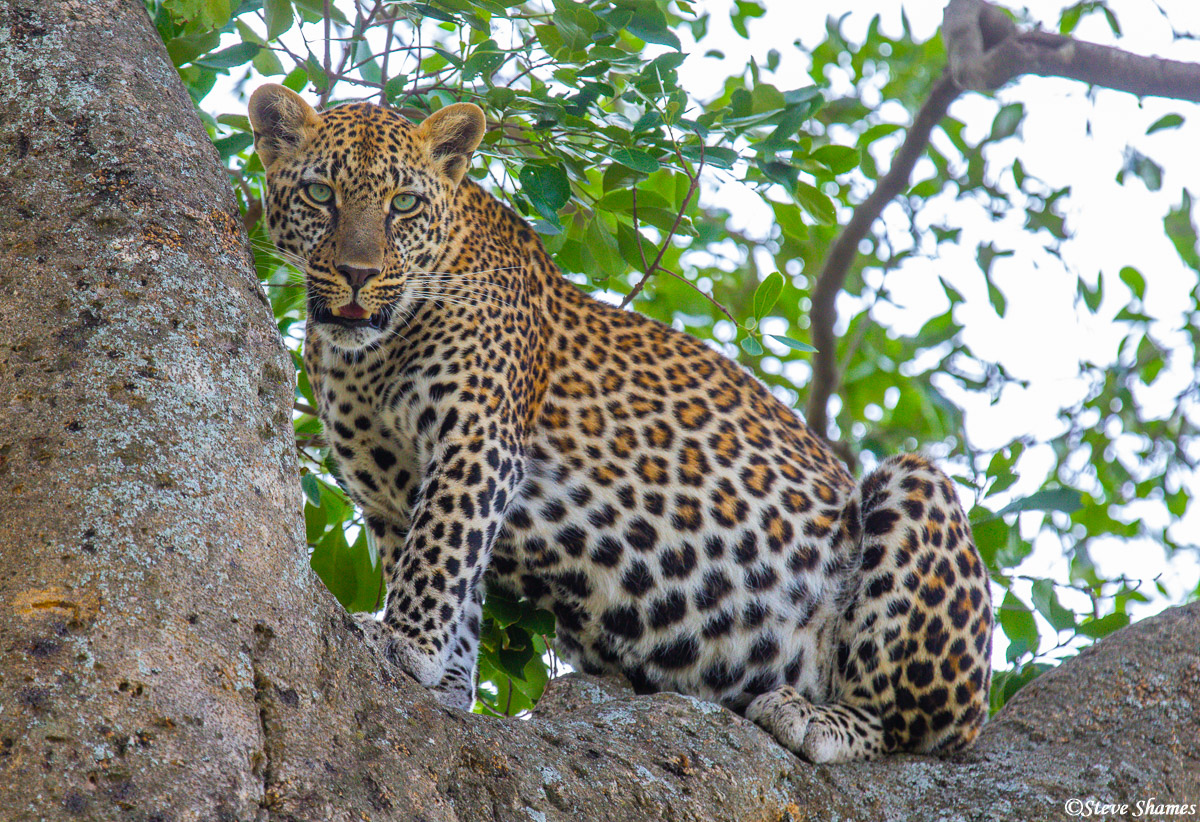
The Big Five lion, leopard, elephant, buffalo and rhinoceros were originally named by hunters as the most dangerous animals to pursue on foot. Today they are the animals most safari travellers hope to see, and Tanzania's northern circuit offers some of the best opportunities in Africa to find them. The black rhinoceros is the most elusive of the five, and no sighting can ever be guaranteed.
The Great Wildebeest Migration
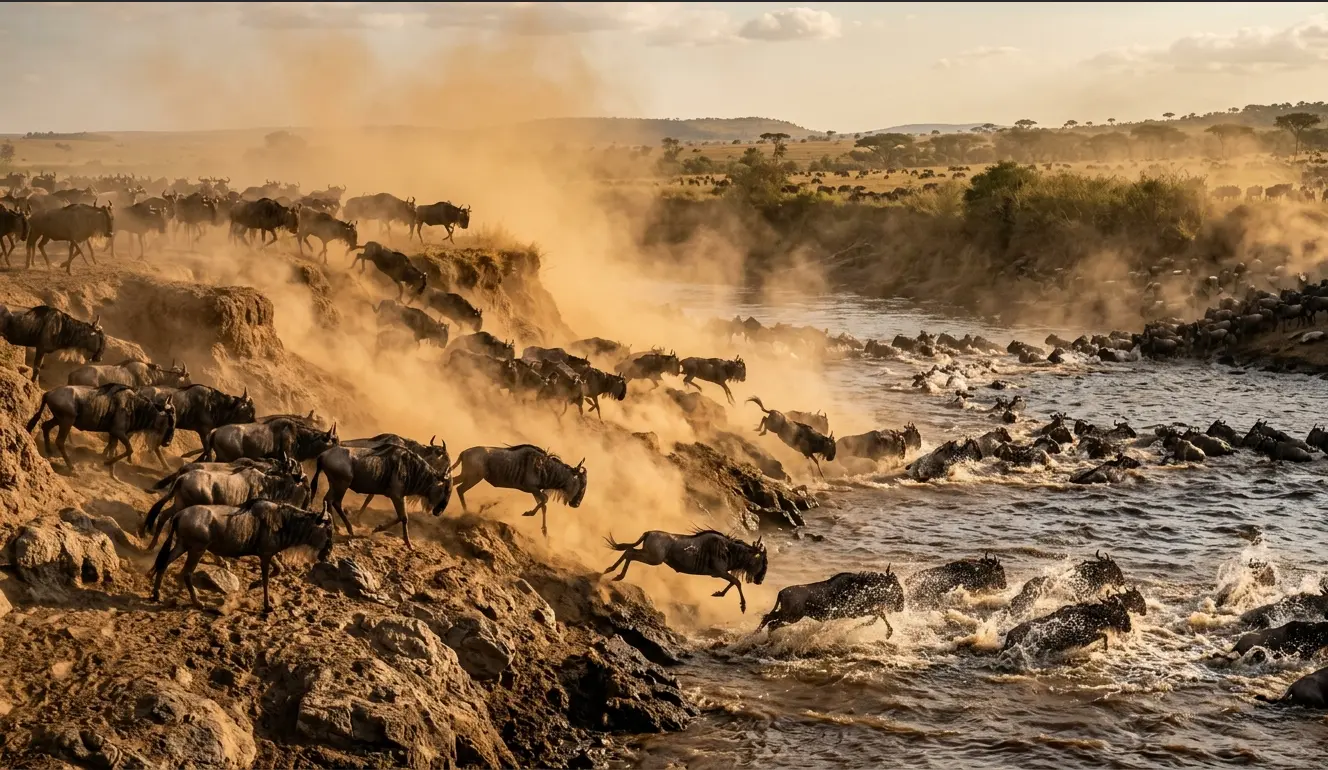
The Great Migration is the continuous, year-round movement of approximately 1.5 million wildebeest, accompanied by hundreds of thousands of zebra and gazelle, through the Serengeti–Mara ecosystem of Tanzania and Kenya. The herds follow the rain and the fresh grazing it brings. Along the way come the calving season in the southern Serengeti, the long march through the Western Corridor and the famous crossings of the Mara River in the north. When you travel decides which chapter of the story you will see.
Why Combine Uganda and Tanzania?
Uganda and Tanzania are neighbours, but their landscapes and wildlife could hardly be more different and that contrast is what makes a combined journey so rewarding.
Uganda is one of only three countries in the world where mountain gorillas live in the wild, alongside Rwanda and the Democratic Republic of the Congo. Tanzania has no mountain gorillas at all. Tanzania, on the other hand, is home to the Serengeti and the Ngorongoro Crater, two of the most celebrated savannah destinations on the continent. Together, they let you experience both of Africa's great wildlife worlds — the forest and the plains on a single trip.
Uganda is also far more than primates. Queen Elizabeth National Park offers elephants, buffalo, lions, leopards and hippos, a boat cruise along the Kazinga Channel and, in the Ishasha sector, the famous tree-climbing lions. Adding it to the journey gives your Uganda section a gentle introduction to savannah wildlife before you reach Tanzania's great plains.
"In Uganda you walk into the forest to meet the animals. In Tanzania, the whole horizon comes to you."


Uganda: The Great Apes Experience
Bwindi Impenetrable National Park mountain gorilla trekking
Bwindi is one of the most important mountain gorilla habitats on earth: an ancient rainforest of steep ridges, deep valleys and dense undergrowth that has given the park its name. The day begins with a briefing from park staff before you enter the forest with your guides and trackers.
The trek may take anywhere from under an hour to several hours, depending on where the gorilla family has moved, the terrain and the weather. Trails can be steep, muddy and overgrown, and porters can be hired to carry your bag and lend a steadying hand. When the family is found, you spend a regulated viewing period with them watching the gorillas feed, rest, groom one another and move through the forest. For many travellers, it is the single most memorable hour of their entire African journey.
Kibale National Park chimpanzee tracking
Kibale's tall tropical forest supports one of East Africa's largest chimpanzee populations, alongside many other primates, colourful birds and forest wildlife. Chimpanzees move both through the canopy and along the forest floor, and their calls often carry through the trees long before the animals come into view.
Tracking is done on foot with trained guides, who locate a habituated chimpanzee community and explain its behaviour and social relationships as you watch. Experiencing Kibale before Bwindi means encountering two of the great apes in a single visit to Uganda each with an entirely different character.
Queen Elizabeth National Park savannah and the Kazinga Channel
Queen Elizabeth National Park is where Uganda's forests give way to open grassland, lakes and acacia woodland. Game drives explore the savannah in search of elephants, buffalo, lions, leopards and antelope, while a boat cruise along the Kazinga Channel, which links Lake George and Lake Edward, brings you close to hippos, crocodiles, buffalo and an extraordinary variety of waterbirds gathering along the banks.
In the park's southern Ishasha sector, lions are known for resting in the branches of large fig trees a rare behaviour that makes them one of Uganda's most sought-after sightings, though never a guaranteed one.


Tanzania: The Big Five Safari Experience
Tarangire National Park elephants and baobabs
Tarangire makes a wonderful introduction to Tanzania's northern circuit. It is known for its large elephant herds, its ancient, swollen-trunked baobab trees and the seasonal concentrations of wildlife that gather along the Tarangire River in the dry months. Game drives may also reveal lions, leopards, buffalo, giraffe, zebra and many species of antelope, in a landscape that feels quite different from the open plains of the Serengeti.
Ngorongoro Crater a world within a volcano
The Ngorongoro Crater is the vast, intact caldera of a collapsed volcano, its walls enclosing grasslands, woodland, wetlands and seasonal lakes. Because so much wildlife lives within this enclosed setting, it is one of the strongest places on the northern circuit for seeing several of the Big Five in a single day. Lions, elephants and buffalo are regularly encountered, and the crater is one of the key places in Tanzania to look for the endangered black rhinoceros though, as always, sightings are never guaranteed.
Serengeti National Park predators and the Great Migration
The Serengeti is one of the most famous wildlife destinations in the world. Its immense ecosystem supports large populations of lions, leopards, cheetahs, elephants and buffalo, and it is the stage for the Great Migration. Depending on the season, you may find enormous herds of wildebeest and zebra, newborn calves on the southern plains, predators shadowing the herds, vast concentrations of wildlife, or crossing attempts at the Grumeti and Mara Rivers. Because the herds move through the year, the location of your camp should be chosen around your travel dates and the part of the migration you most want to see.


The Great Migration: When and Where to Go
The migration is not a single event on a fixed date. It is a continuous journey shaped by rainfall, grazing and water, and its timing shifts from year to year. What follows describes the typical pattern, and where we would base you in each season.
January to March: calving season in the southern Serengeti
At the start of the year, the herds gather on the short-grass plains of the southern Serengeti and around Ndutu. This is the calving season, when hundreds of thousands of wildebeest calves are born within a few weeks of one another, with February often the peak. The landscapes are green after the rains, newborn calves take their first unsteady steps, and lions, cheetahs, leopards and hyenas gather to take advantage of the abundance. It is an exceptional time for predator action and photography. Where to stay: Ndutu and the southern Serengeti.
April to June: the herds move north and west
As the southern plains dry out, the herds begin to move through the central Serengeti, sometimes in columns stretching for kilometres across the plains. By June, much of the activity may be concentrated in the Western Corridor. Where to stay: the central Serengeti and Western Corridor.
June to July: the Grumeti River
In the Western Corridor, the herds meet their first major river. The Grumeti, home to large crocodiles, can produce dramatic crossings, though their timing and scale vary from year to year. This season appeals to travellers who would like a migration experience away from the busier northern areas. Where to stay: the Western Serengeti and Grumeti region.
July to October: the Mara River crossings
For many travellers, this is the most dramatic chapter of all. Large herds gather near the Mara River before crossing between Tanzania's Northern Serengeti and Kenya's Maasai Mara approaching steep banks, braving strong currents and running the gauntlet of waiting crocodiles. Herds may wait for hours or days, approach the water and turn back, or cross somewhere else entirely, so we always recommend several nights in the north rather than a brief visit. Where to stay: Kogatende, Lamai and the wider Northern Serengeti.
November to December: the return south
As the short rains refresh the southern grasslands, many herds turn back through the central Serengeti towards the south, completing the cycle and preparing for the next calving season. Where to stay: the central and southern Serengeti.
The migration is a natural event, and its movements change with rainfall and grazing conditions. No responsible safari operator can guarantee a river crossing on a particular date. The best approach is to match your travel dates to the most likely region and allow enough time for the wildlife to reveal itself.

A Sample 15-Day Great Apes, Big Five and Migration Safari
Fifteen days gives a practical balance between Uganda's primates and Tanzania's northern circuit. The route below is a starting point; exact lodges, flights, park arrangements and overnight locations are confirmed around availability and your travel dates.
Days 1–2 Arrival in Uganda and the journey to Kibale
You are welcomed at Entebbe International Airport by your Savannah Explore Africa representative and, depending on your arrival time, spend the first night on the shores of Lake Victoria. The next day you travel west through rolling countryside, farmland and small towns to Kibale National Park, arriving at your forest lodge in time for a relaxed evening before the chimpanzee experience.
Day 3 Chimpanzee tracking in Kibale Forest
After a briefing from park staff, you walk into the forest with experienced guides to find a habituated chimpanzee community. You may watch them feed in the fig trees, groom one another, call across the forest or move quickly along the ground. It is a fascinating insight into the social lives of one of humanity's closest living relatives. The afternoon is yours to enjoy at the lodge.
Days 4–5 Queen Elizabeth National Park
The journey continues south to Queen Elizabeth National Park. Game drives search for elephants, buffalo, lions and antelope across the savannah, and a boat cruise on the Kazinga Channel offers a completely different perspective, with hippos, crocodiles and waterbirds crowding the shoreline. Depending on your route, you may also explore the Ishasha sector in search of its tree-climbing lions on your way towards Bwindi.
Days 6–7 Mountain gorilla trekking in Bwindi
You travel to Bwindi Impenetrable National Park, staying at a lodge chosen to make the trekking sector you have been assigned as easy to reach as possible. The following morning is the highlight of the Uganda section. After the briefing, you enter the forest with your guides and trackers, climbing through dense vegetation until the gorilla family is found. You then spend your precious time in their company, before returning to the lodge for a quiet evening of reflection.
Day 8 Flight connection to Tanzania
Today you leave Uganda for Tanzania. Depending on schedules, a short light-aircraft flight from an airstrip near Bwindi to Entebbe can save a long road journey, before your regional flight to Kilimanjaro International Airport or another northern Tanzania gateway. On arrival, you transfer to your lodge in the Arusha area. The connection is planned carefully, with generous time between flights.
Day 9 Tarangire National Park
Your Tanzania safari begins among the baobabs of Tarangire. A full day of game drives explores the park's woodlands and the wildlife gathered along the river — above all its elephants, but also lions, leopards, buffalo and giraffe. You spend the night at a lodge or tented camp in or near the park.
Day 10 Into the Ngorongoro highlands
The road climbs into the cool, green highlands of the Ngorongoro Conservation Area, with sweeping views as you approach the crater. Depending on your choice of accommodation, you spend the night on the crater rim or elsewhere in the conservation area, ready for an early descent the next morning.
Day 11 Ngorongoro Crater game drive
You descend into the crater for a wildlife-focused game drive among lions, elephants, buffalo, hyenas, zebra and many antelope, with a chance of the rare black rhinoceros. After the crater, you continue onward towards the Serengeti, with your overnight location shaped by your route and season.
Days 12–14 The Serengeti: Big Five and the Great Migration
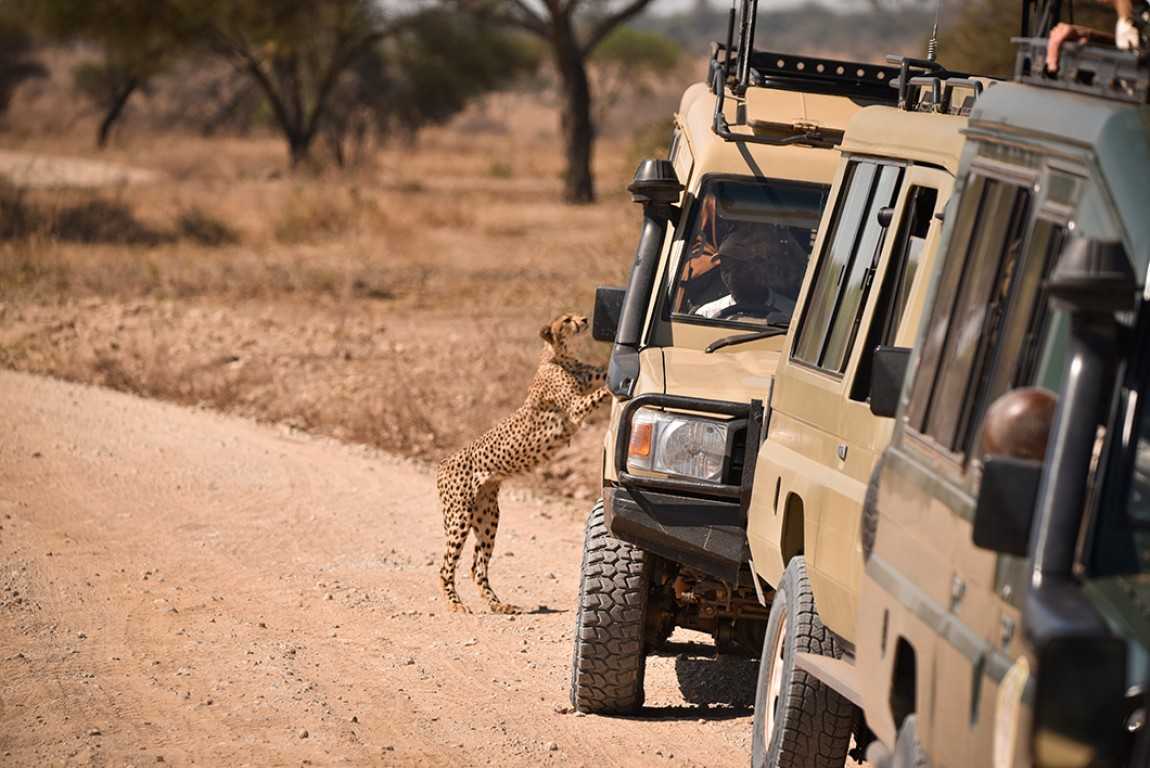
Three full days in the Serengeti bring you to the heart of the journey. Its open plains, woodlands and rivers could not feel more different from Uganda's forests, and game drives search for lions, leopards, cheetahs, elephants and buffalo alongside the migration herds.
Your camp is chosen by season: Ndutu and the south from January to March for the calving; the central Serengeti and Western Corridor from April to June as the herds move north; Kogatende and the Mara River region from July to October for the crossings; and the central and southern Serengeti in November and December as the herds return. Three nights make a good introduction, but a fourth is well worth adding if the migration is a priority.
Day 15 Departure or onward to Zanzibar
After a final breakfast on the plains, you fly from a Serengeti airstrip to connect with your international flight, usually through Kilimanjaro. If you would like to unwind before heading home, a few nights on the beaches of Zanzibar make a perfect finale.


How Long Do You Need?
The ideal length depends on how many destinations you would like to include and how relaxed you want the pace to be.
In 10 to 12 days, it is possible to include gorilla trekking, one other Uganda experience and a shorter Tanzania safari, but the route needs careful planning and fewer stops. Thirteen to 15 days allows a good introduction to both countries, covering chimpanzees, gorillas, Queen Elizabeth, Ngorongoro and the Serengeti. With 16 to 18 days, the pace becomes more comfortable, with extra time in both countries and additional Serengeti nights. And 19 to 21 days opens up an extended journey with more parks and time on Zanzibar's beaches.
Our recommendation is 15 to 18 days. If the migration is your main reason for visiting Tanzania, consider extending your Serengeti stay to four or five nights.
When Is the Best Time to Visit?
Both countries can be visited throughout the year, and gorilla and chimpanzee trekking take place every month in Uganda. What changes with the seasons is the weather on the forest trails and the position of the migration herds in Tanzania. The best time to travel depends on which experiences matter most to you.
June to September
This is the most popular time to combine the two countries. Uganda is generally drier, which makes forest trekking more comfortable, though rain is possible at any time of year in a rainforest. In Tanzania, the dry season brings excellent game viewing, and July to September is the classic window for the Northern Serengeti and the Mara River crossings.
December to February
This is another excellent window. Parts of this period bring good trekking conditions in Uganda, while the southern Serengeti and Ndutu offer the calving season, with its newborn calves and intense predator activity.
March to May
These are generally the long rains in much of Uganda and a wetter season in Tanzania. Some roads and forest trails become more challenging, and journeys can take longer. In return, there are fewer visitors, beautifully green landscapes and, at some properties, seasonal rates.
October and November
These months can feel quieter in many areas, though rainfall patterns vary. In Tanzania, October may still bring late crossings in the north, while November sees the herds beginning their return south.
Because Uganda and Tanzania do not share identical seasons, a good itinerary considers the expected conditions in each country separately. And because the migration never follows exact dates, seasonal patterns should be treated as a guide rather than a guarantee.
Can You See All of the Big Five?
Tanzania is one of Africa's leading Big Five destinations, but seeing all five on a single trip is never guaranteed. Lions and leopards can be found across the Serengeti, Ngorongoro and Tarangire, with the Serengeti especially renowned for its big cats. Elephants are a highlight of Tarangire and are also seen in the Serengeti and Ngorongoro. Buffalo are common in all three. The black rhinoceros is the real challenge: its numbers are small, it is naturally shy, and the Ngorongoro Crater is one of the best places in northern Tanzania to look for it.
A good safari plan includes the right habitats for each animal, but no responsible operator will ever promise that every one will be seen.
It is worth knowing that Uganda has its own Big Five opportunity. Lions, leopards, elephants and buffalo all live in its national parks, and southern white rhinos can be tracked on foot at Ziwa Rhino Sanctuary. Ziwa is a protected sanctuary rather than a wild national park encounter, but it makes a memorable addition for travellers who would like to complete the five in Uganda.
Travelling Between Uganda and Tanzania
Although the two countries are neighbours, the distances between the parks on this route are large, and flying is by far the most practical way to connect them. Travellers usually fly from Entebbe International Airport to Kilimanjaro International Airport, or another suitable gateway in northern Tanzania, depending on the schedules operating on your dates.
We plan the connection as part of the whole journey: whether a direct flight operates on your day or a connection is needed, baggage allowances on regional and light aircraft, airport transfers and check-in times, whether an overnight stop makes sense, and how your arrival fits with the first day of your Tanzania safari. An overland journey is technically possible, but for this itinerary it would cost precious days that are far better spent with the wildlife.
What Shapes the Cost of This Safari?
There is no single fixed price for a Uganda and Tanzania safari, because every journey is designed around its travellers. The final cost depends on the number of people travelling, the style of accommodation, the activities included, private guiding, flights and the length of your trip.
In Uganda, the gorilla trekking permit is one of the most significant costs, and the current tariff should always be confirmed with the Uganda Wildlife Authority for your travel dates. The chimpanzee tracking permit depends on the park authority's tariff and the type of experience you choose. Across both countries, accommodation varies widely, with luxury lodges and premium tented camps commanding higher rates than mid-range properties.
Private 4x4 vehicles and professional guides, including fuel and transfers, form another important part of the budget, as do Tanzania's park and conservation fees, which vary with the parks and activities included. The regional flight between Uganda and Tanzania, together with any internal light-aircraft flights, also influences the final figure, as do optional extras such as a Zanzibar extension.
For an accurate quotation, share your intended travel dates, group size, preferred accommodation style and approximate trip length, and we will show you exactly where your budget goes.

Who Is This Safari For?
This journey suits travellers who want variety rather than a holiday spent entirely in a safari vehicle. Wildlife enthusiasts will love the contrast between Uganda's forests and Tanzania's savannah, and the chance to see two very different ecosystems in one trip. For couples and honeymooners, it is a beautifully varied romantic journey, moving from intimate forest lodges to luxury camps overlooking the plains.
Wildlife photographers will find an extraordinary range of subjects, from primates in the soft light of the forest to predators, elephants and migrating herds in open country, and we can match vehicles, guides and camps to photographic needs. Families with older children can enjoy the journey too, provided everyone meets the age requirements: the minimum age for gorilla trekking in Uganda is 15, and chimpanzee tracking generally requires children to be at least 12, with some lodges and activities setting their own limits. And for first-time safari travellers, few itineraries offer such a complete introduction to East Africa.
Plan Your Great Apes, Big Five and Great Migration Safari With Savannah Explore Africa
The journey from Uganda's rainforest to Tanzania's open savannah is one of the most rewarding ways to experience East Africa.
Begin by tracking chimpanzees through Kibale Forest. Continue to Bwindi for a mountain gorilla encounter. Explore the wildlife-rich plains and waterways of Queen Elizabeth National Park before flying to Tanzania for the elephants of Tarangire, the remarkable wildlife of Ngorongoro Crater and the iconic landscapes of the Serengeti.
Depending on your travel dates, your Serengeti experience can focus on the wildebeest calving season in the south, migration movement through the Western Corridor or the dramatic Mara River crossing season in the north.
At Savannah Explore Africa, we specialise in private, tailor-made East African safaris designed around individual interests, travel dates and accommodation preferences.
We coordinate gorilla trekking permits, chimpanzee tracking, safari accommodation, private 4x4 transport, domestic flights and Tanzania wildlife experiences into one carefully planned journey.
Whether you are travelling as a couple, family or private group, we can help you design a safari that combines the great apes of Uganda with Tanzania's Big Five and the extraordinary Great Wildebeest Migration.
Plan From Forest to Savannah
Chimpanzees in Kibale, gorillas in Bwindi, the Big Five of Ngorongoro and the migrating herds of the Serengeti woven into one private journey. Share your travel dates, party size and preferred style of comfort, and we will design it around you.
Begin Your Journey
Your story starts
in East Africa.
Tell us your dates, your dream, and how you like to travel. We will design something extraordinary, only for you.