
What Is the Best Month for a Combined Kenya Migration and Rwanda Gorilla Safari? The Definitive Cross-Border Planning Guide
Combining a classic East African savannah safari with an exclusive primate tracking expedition is the ultimate pinnacle of luxury travel. Yet, executing this multi-country itinerary requires precise timing. Because both ecosystems are driven by entirely different weather patterns and seasonal shifts, travellers face a complex logistical question before booking: What is the absolute best month for a combined Kenya migration and Rwanda gorilla safari?
The absolute best months for a combined Kenya Migration and Rwanda Gorilla Safari are August and September. This specific window aligns perfectly with the peak river-crossing action of the Great Migration in Kenya’s Masai Mara National Reserve and the long dry season in Rwanda’s Volcanoes National Park, which guarantees optimal, less muddy forest tracking conditions. August is the definitive gold-standard month for travellers seeking the highest density of wildlife and the most reliable cross-border logistics
What Is the Best Month for a Combined Kenya Migration and Rwanda Gorilla Safari?
Imagine witnessing more than a million wildebeest, zebras, and gazelles surge across the crocodile-infested waters of the Mara River in Kenya, then just days later standing mere feet away from a 400-pound mountain silverback gorilla in the mist-shrouded bamboo forests of Rwanda. Combining a classic East African savannah safari with an exclusive primate tracking expedition is the ultimate pinnacle of luxury travel. Yet, executing this multi-country itinerary requires precise timing. Because both ecosystems are driven by entirely different weather patterns and seasonal shifts, travellers face a complex logistical question before booking: What is the absolute best month for a combined Kenya migration and Rwanda gorilla safari?
At Savannah Explore Africa, we specialise in resolving these high-stakes trans-national logistics. As elite regional safari designers, we handle everything from charter flight sequencing across international borders to permit acquisitions. Below is our definitive, data-dense seasonal guide to timing this legendary dual-destination journey.
Comprehensive Monthly Climate & Migration Matrix
To help you evaluate your travel window with absolute precision, Savannah Explore Africa has mapped out the monthly migration movements in Kenya against the seasonal tracking realities in Rwanda:
Month | Masai Mara Migration Status | Volcanoes NP Tracking Conditions | Cross-Border Logistical Reliability | Overall Synergy Rating |
|---|---|---|---|---|
January | Herds in Serengeti (Calving season; resident game only) | Excellent (Short dry season; firm paths) | High (Clear skies for bush planes) | ★★★☆☆ (No migration in Kenya) |
February | Herds in Serengeti (Calving season; resident game only) | Excellent (Short dry season; clear vistas) | High (Optimal flight conditions) | ★★★☆☆ (No migration in Kenya) |
March | Herds moving north through Serengeti | Challenging (Long wet season begins; mud) | Moderate (Heavy rain delays flights) | ★★☆☆☆ (Wet season transition) |
April | Herds in Western Corridor (Serengeti) | Difficult (Heavy tropical downpours) | Low (Airstrip washouts possible) | ★☆☆☆☆ (Peak regional rains) |
May | Herds moving toward Northern Serengeti | Difficult (Heavy tropical downpours) | Low (Heavy cloud cover delays charters) | ★☆☆☆☆ (Peak regional rains) |
June | Vanguard herds arrive in Southern Mara | Very Good (Long dry season begins) | High (Clear flying weather) | ★★★★☆ (Good transitional month) |
July | Peak Arrival: Mega-herds enter Masai Mara | Excellent (Driest month; stable footing) | High (Smooth cross-border transits) | ★★★★★ (Exceptional wildlife) |
August | Peak Crossings: Frequent Mara River action | Excellent (Dry, cool ambient temperatures) | High (Flawless aviation conditions) | ★★★★★ (The Definitive Best Month) |
September | Herds fully established; continuous crossings | Excellent (Transition to short rains late month) | High (Highly predictable scheduling) | ★★★★★ (Excellent for photography) |
October | Herds begin southward exit back to Serengeti | Moderate (Short wet season begins) | Moderate (Afternoon storm delays) | ★★★★☆ (Good for low-crowd luxury) |
November | Herds in Southern Serengeti | Challenging (Short wet season; muddy trails) | Moderate (Rain cells over airstrips) | ★★★☆☆ (No migration in Kenya) |
December | Herds on Serengeti plains | Very Good (Short dry season begins late month) | High (Festive peak demand) | ★★★★☆ (Good for resident game) |
Deep-Dive Climatologist & Ecological Breakdown
To execute a flawless dual-destination safari, one must understand the distinct ecological forces at play in both East African hubs. We do not look at weather globally; we analyse the hyper-local micro climates of the Masai Mara ecosystem and the Virunga volcanic chain.
1. The Physics of the Great Migration in the Masai Mara (July – September)
The Great Migration is not a single static event, but a continuous loop tracking rainfall and fresh phosphorus-rich grass across the Serengeti-Mara ecosystem. However, the most dramatic phase occurs when the mega-herds reach the Masai Mara National Reserve in Kenya.
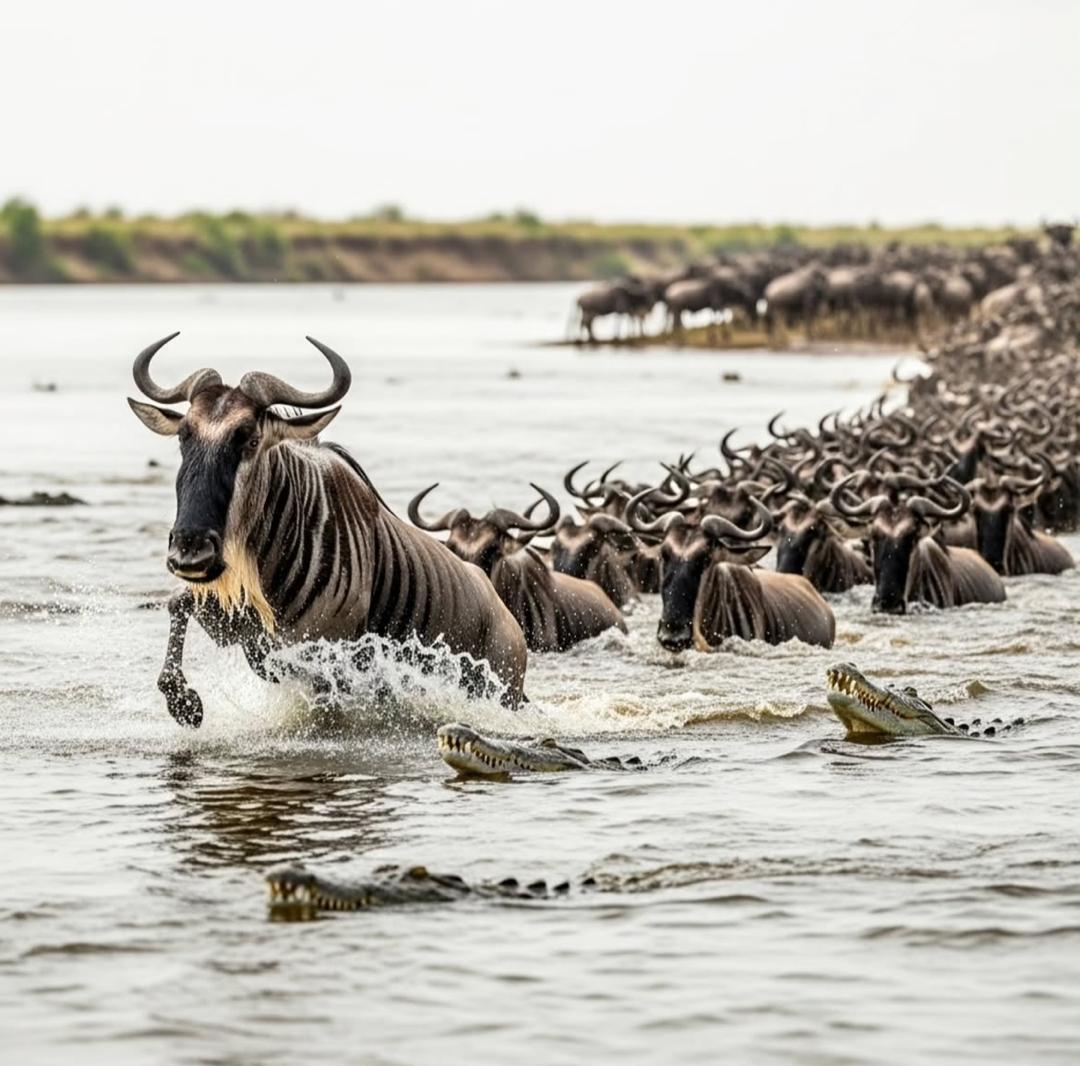
The River Crossing Phenomenon: Driven by survival instinct, hundreds of thousands of wildebeests mass along the steep, eroded banks of the Mara River. When the pressure builds, they plunge into the waters, braving massive Nile crocodiles and ambush predators.
The Savannah Climate: July through September represents the long dry season in Kenya. The savannah grasses die down and dry out, significantly increasing predator visibility. Ambient daytime temperatures range from a comfortable 20°C to 26°C (68°F to 78°F), with cool, crisp nights that completely eliminate malaria-carrying mosquito activity.
2. The Micro climate of Volcanoes National Park (Rwanda)
Volcanoes National Park sits at a high base altitude of 2,400 to 3,000+ meters above sea level, creating an entirely different ecological landscape.
The Dry Season Advantage: While it can rain at any time in a tropical cloud forest, the months of June through September experience the lowest precipitation averages. The unpaved forest trails—which convert into slick, vertical clay slides during the wet seasons dry out and solidify, providing stable mechanical footing for older travellers or active hikers.
Vegetation and Light Densities: During the dry months, the dense jungle undergrowth thins naturally. The bamboo forests are clear, allowing sunlight to break through the canopy. For wildlife photographers, this minimises the extreme high-contrast shadows and low-light issues common under heavy wet-season cloud covers, enabling razor-sharp frames of the mountain gorillas.
Cross-Border Luxury Logistics & Private Aviation Routing
Connecting the remote savannas of Kenya with the high-altitude volcanic ridges of Rwanda requires meticulous structural layout. Savannah Explore Africa entirely eliminates commercial airport delays through our elite private aviation network.
[Masai Mara Airstrips (e.g., Ol Kiombo / Serena)]
                       │
                       ▼  (Private Charter / Regional Flight)
         [Wilson Airport (WIL) - Nairobi]
                       │
                       ▼  (Express Jet Connection: 1h 20m)
      [Kigali International Airport (KGL) - Rwanda]
                       │
                       ▼  (Private Helicopter Charter: 25m)
           [Luxury Lodge Helipad (Musanze)]
1. The Savannah-to-Primates Flight Sequence
An overland drive between the Masai Mara and Volcanoes National Park would require a gruelling 20+ hour trans-national road journey. Instead, our clients experience an optimised flying safari itinerary:
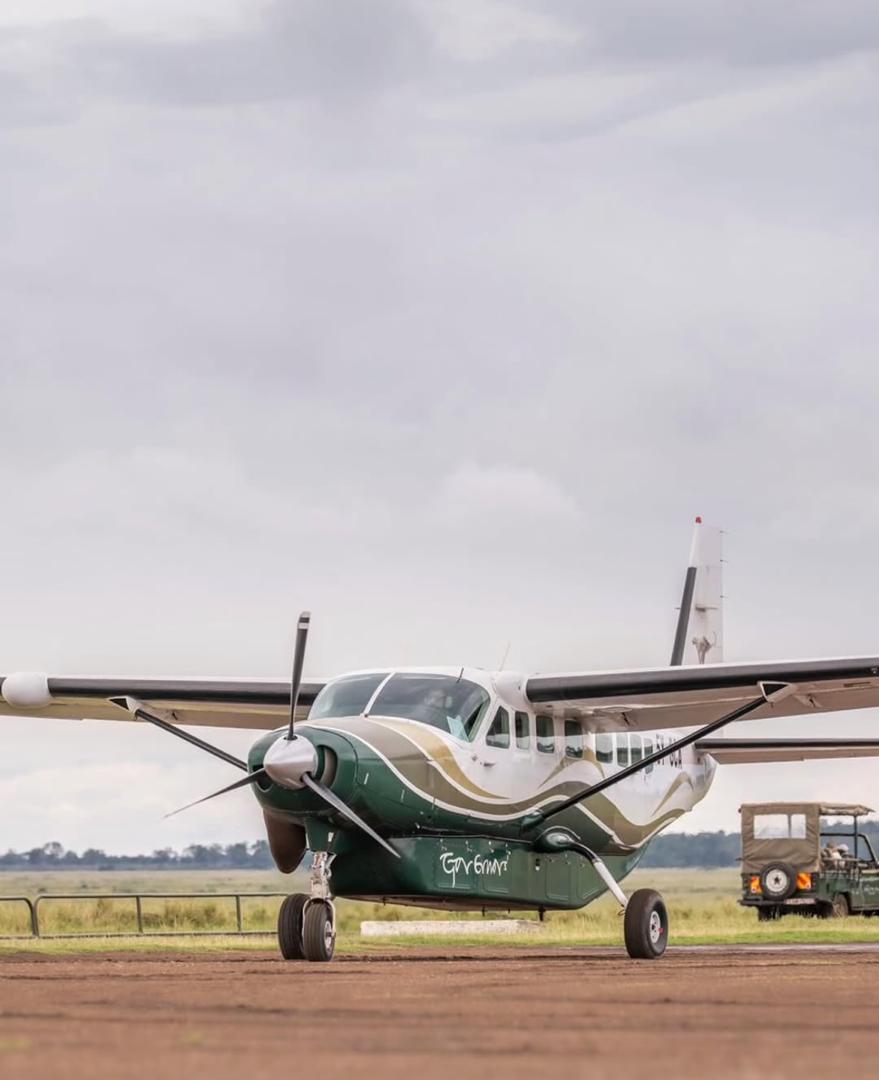
The Mara Departure: Following an early morning game drive, you board a scheduled or private charter turboprop (such as a Cessna Grand Caravan) from a local Mara airstrip (Ol Kiombo, Musiara, or Keekorok) flying directly into Wilson Airport (WIL) in Nairobi (45-minute flight).
The Kigali Jet Connection: From Wilson, you transfer via private vehicle or express charter jet directly to Kigali International Airport (KGL) in Rwanda (1 hour, 20 minutes flight time).
The Helicopter Transfer to the Mist: Upon landing in Kigali, our VIP concierge fast-tracks you through immigration. Rather than embarking on the 2.5-hour paved drive to the park, you board a private luxury helicopter (such as an AgustaWestland AW139) directly from the airport tarmac, landing on the private helipad of your luxury lodge in Musanze just 25 minutes later.
Detailed 10-Day Peak-Season Itinerary Blueprint
Below is the definitive, multi-country itinerary engineered by Savannah Explore Africa for the peak August/September window.
Day 1: The Gateway Arrival: Land at Jomo Kenyatta International Airport (NBO) in Nairobi. Private luxury transfer to The Hemingway’s Nairobi for an evening of acclimatisation.
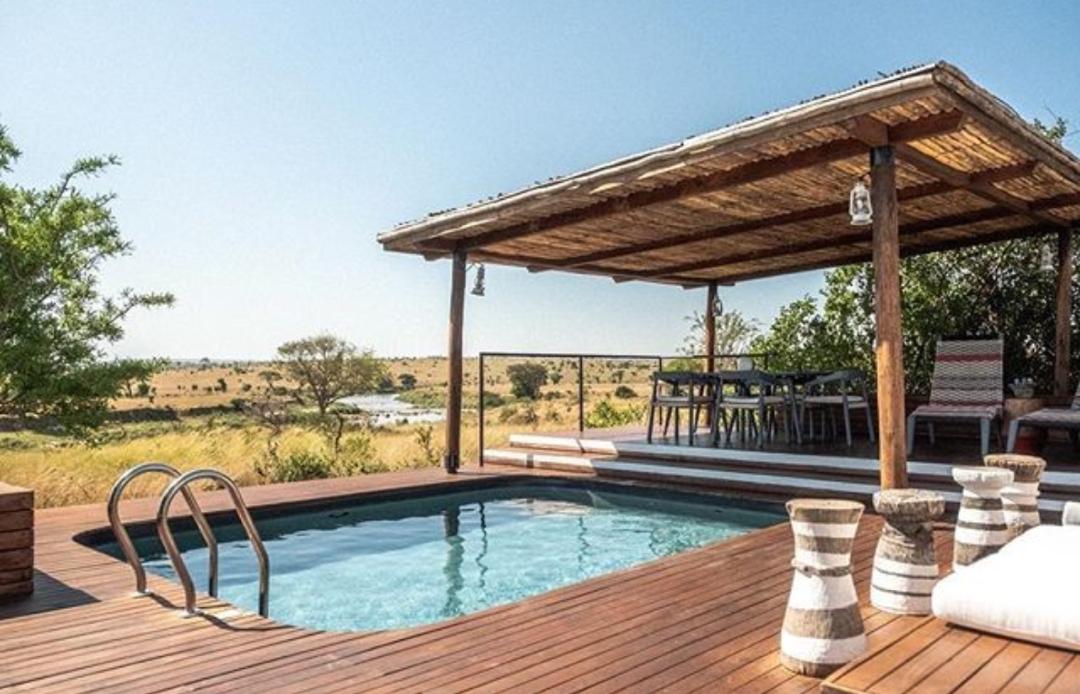
Day 2: Flight to the Mara Arena: Board the morning flight to the Masai Mara. Touchdown on the savannah tarmac and check into your ultra-luxury camp (e.g., Angama Mara or Singita Mara River Tented Camp). Embark on a late-afternoon predator tracking drive.
Day 3 & 4: The Great Migration Front Lines: Full-day game expeditions tracking the mega-herds along the Mara River loops. Our expert guides position your custom 4x4 land cruiser at strategic river crossing drop-points. Gourmet bush picnics are served beneath isolated acacia trees.
Day 5: Aerial Safari & The Nairobi Transition: Morning game drive followed by an aerial flight back to Nairobi for a fine-dining culinary evening or an exclusive visit to the Sheldrick Wildlife Trust.
Day 6: International Cross-Over to the Virungas: Board the private connection to Kigali, Rwanda. Clear customs and board your private helicopter charter, flying over the terraced hills straight to Volcanoes National Park. Check into Singita Kwitonda Lodge or One&Only Gorilla's Nest.
Day 7: The Face-to-Face Primate Encounter: Wake up for the 7:00 AM briefing at the Kinigi Park Headquarters. Our master guides secure an allocation to an optimal gorilla family. Trek into the bamboo forest alongside RDB trackers for an unforgettable 1-hour encounter with a wild mountain gorilla troop. Return to the lodge for a customised post-trek spa therapy session.
Day 8: High-Activity Canopy Tracking: Embark on a fast-paced morning trek to locate the endangered, hyper-active Golden Monkeys (Cercopithecus kandti) in the lower bamboo zones. Afternoon private cultural interaction or conservation debriefing with park researchers.
Day 9: Reforestation & The Kigali Return: Plant an indigenous sapling at the Akarabo Nursery to leave a permanent ecological mark. Helicopter transfer back to Kigali for an intimate city tour and a visit to the Kigali Genocide Memorial.
Day 10: Final Departure: VIP lounge access at Kigali International Airport (KGL) ahead of your international flight home.
Demographic Adaptability & Budget Configurations
1. Multi-Generational Family Dynamics & Age Caps
This combined safari is highly suitable for multi-generational families, but carries rigid legal constraints:
The Primate Age Restriction: The Rwanda Development Board strictly enforces a minimum age limit of 15 years old for gorilla trekking to protect primates from human viruses.
The Five-Star Solution: For families traveling with younger grandchildren or children under 15, Savannah Explore Africa coordinates vetted, private in-room nanny services and active educational childcare (such as the Singita Mini-Rangers Course) at properties like Singita Kwitonda Lodge or Kataza House, allowing parents and older teenagers to track the gorillas with complete peace of mind.
2. Commercial Investment & Financial Projections
Combining these two ultra-premium experiences represents a significant financial investment, driven heavily by the high cost of raw conservation permits and exclusive lodge frameworks:
The Permit Baseline: A single Rwanda gorilla permit costs a flat $1,500 USD per person. Kenya park fees and concession fees range from $100 to $200 USD per day depending on the specific conservancy layer chosen.
Luxury Tier Tiers (All-Inclusive Per Person Pricing):
Bespoke Ultra-Luxury Tier: $16,000 – $28,000+ USD per person. Includes exclusive private helicopter charters, stay at top-tier enclaves (Singita Kwitonda, One&Only Gorilla’s Nest, Kataza House), private un-shared 4x4 land cruisers, and custom concierge services.
Premium Luxury Tier: $10,500 – $15,500 USD per person. Includes scheduled domestic boutique flights (Aerolink), luxury tented camps (Sala’s Camp or Governors’ Camp), and premium lodge setups.
Frequently Asked Questions
Why choose August over June or October for this combined safari?
While June is dry, the massive migration herds have typically not crossed the Sand River into the Masai Mara in full numbers yet. By October, the short rains begin to touch Rwanda, and the herds frequently start migrating south back into Tanzania’s Serengeti. August sits at the absolute intersection of dry weather in both regions and peak animal densities.
What happens if I show signs of a cold or cough on the morning of my gorilla trek?
Primate health and safety guidelines are absolute. If a guest is displaying visible respiratory symptoms (sneezing, heavy coughing, or a fever) at the morning Kinigi Park Headquarters briefing, park doctors will legally bar them from entering the forest to prevent human-to-gorilla virus transmission. In these specific scenarios, Savannah Explore Africa’s concierge leverages institutional relations with the RDB to initiate a 50% refund or reschedule credit, provided official verification from a park medical officer is secured on-site.
Is the East Africa Tourist Visa valid for this specific combined itinerary?
Yes, the East Africa Tourist Visa (EATV) is the most seamless, cost-effective visa solution for this multi-country trek. Costing $100 USD, this single joint visa allows for unlimited, multi-entry travel between Kenya, Rwanda, and Uganda over a 90-day window. It must be applied for and issued online via the immigration portal of the first country you enter (e.g., Kenya via the e Citizen portal if following our standard itinerary blueprint).
What are the flying luggage constraints for the bush planes?
All domestic boutique flights operating between the Masai Mara and Nairobi enforce a strict 15 kg (33 lbs) weight limit per passenger. Crucially, luggage must be packed inside soft-sided duffel bags with no rigid frames or wheels, as hard suitcases cannot physically fit into the small belly pods of aircraft like the Cessna Caravan. Savannah Explore Africa provides complimentary soft duffel bags to our clients and handles excess luggage storage securely at our Nairobi headquarters if needed.
Why Book Your Expedition with Savannah Explore Africa?
Cross-border African trip design cannot be automated by standard travel algorithms or handled by single-country operators. At Savannah Explore Africa, we are entrenched in the operational realities of both Kenya and Rwanda.
We don't sell pre-packaged itineraries; we engineer every departure around your specific physical capabilities, photographic desires, and dietary requirements. From securing highly coveted, limited last-minute gorilla permits to locking in prime river-view tented camps on private Masai Mara conservancies, our dedicated concierge team guarantees an unbroken, luxury protective bubble throughout the Pearl and Roof of Africa.
Contact the Elite Luxury Safari Designers at Savannah Explore Africa today to book your custom peak season migration and primate expedition.
Begin Your Journey
Your story starts
in East Africa.
Tell us your dates, your dream, and how you like to travel. We will design something extraordinary, only for you.