 Plan This Experience
Photographic
Safaris.
East Africa is the greatest wildlife photography destination on earth. The light, the subjects, the scale and the diversity of encounters available in a single day are matched nowhere else. Whether you carry a smartphone or a 600mm prime, this region will produce photographs you have never seen before.
The Greatest Wildlife Photography Destination on Earth
Wildlife photographers know East Africa the way mountaineers know the Himalayas. It is the destination against which every other is measured. The combination of accessible, habituated wildlife in extraordinary density, diverse and dramatic landscapes, the world's most spectacular single wildlife event in the Great Wildebeest Migration, and a quality of equatorial light that professional photographers return to year after year makes East Africa uniquely, irreplaceably productive for photography of every level.
The difference between a standard safari and a photographic safari is fundamentally about time, positioning and flexibility. On a standard shared game drive, the vehicle moves on when the majority of passengers are satisfied. On a photographic safari with a private vehicle, you stay at a sighting for as long as you need. You reposition until the light and the subject align. You wait for the behaviour that tells the story. You leave when the photograph is made, not when the group is ready to go to breakfast. This is why every photographic safari we arrange is exclusively by private vehicle.
Our guides who lead photographic safaris understand photography as well as they understand wildlife. They know where the light falls at 6am and at 5pm. They know which angles keep the savannah clean behind the subject and which introduce distracting vegetation. They know how to position the vehicle so the client can shoot from a beanbag rest with the window at the correct height. They know when to switch off the engine so vibration does not affect the image. None of these things happen on a shared vehicle with a general guide. All of them happen on a photographic safari arranged through us.
Photographic safaris are not only for professional photographers or those with expensive equipment. A smartphone held by a person in the right place at the right time in the right light produces extraordinary images. The principles of photographic safari apply equally to a Sony A1 and an iPhone: private vehicle, expert positioning, patience and the willingness to be out in the field during the golden hours.
Golden hour: first and last 45 min of sun
What We Provide
Private Vehicle. Always.
Every photographic safari we arrange uses a private vehicle exclusively for your group. No other guests. No competing interests. No schedule to keep. The vehicle stays at any sighting for as long as the photography demands and repositions as many times as required. This is the single most important difference between a photographic safari and a standard game drive.
Golden Hour Priority
We build every photographic safari itinerary around the light. Departures at first light (5.30 to 6am), returns to camp during the flat midday light, and back in the field for the late afternoon golden hour. The schedule is designed to maximise your time in the field during the only hours that produce world-class photographs.
Specialist Photography Guides
Our photography-specialist guides understand both wildlife behaviour and photographic technique. They know how to position the vehicle for clean backgrounds, where the light will be in an hour's time, when a behaviour sequence is building, and how to talk you through a shot without the vehicle moving. Their guiding style is patient, unhurried and entirely responsive to photographic objectives.
Photography Hides and Ground Blinds
Several specialist photography lodges in Kenya and Tanzania operate sunken hides at waterholes, allowing ground-level photography of wildlife at eye height. These produce images that are impossible from any vehicle. We arrange accommodation at photography-focused properties where hides are part of the offering: including Ol Pejeta in Laikipia, specialist Mara photography camps and certain Serengeti lodges with hide infrastructure.
Beanbag Rests and In-Vehicle Support
Every vehicle we use for photographic safaris is equipped with beanbag lens rests for window shooting. Beanbag rests eliminate camera shake from long telephoto lenses and transform the stability of handheld photography from a moving vehicle. Vehicles also have charging ports for camera batteries and laptop editing setups. The engine is switched off at active sightings to eliminate vibration.
Schedule Built for Photography
A photographic safari schedule looks different from a standard safari schedule. Very early departures are non-negotiable. Extended time at productive sightings rather than covering maximum distance. Midday breaks for equipment care, editing and rest. Positioning at key locations ahead of predictable wildlife activity. We build every itinerary with photography as the primary objective and wildlife viewing as the natural result.
Where to Shoot

Masai Mara
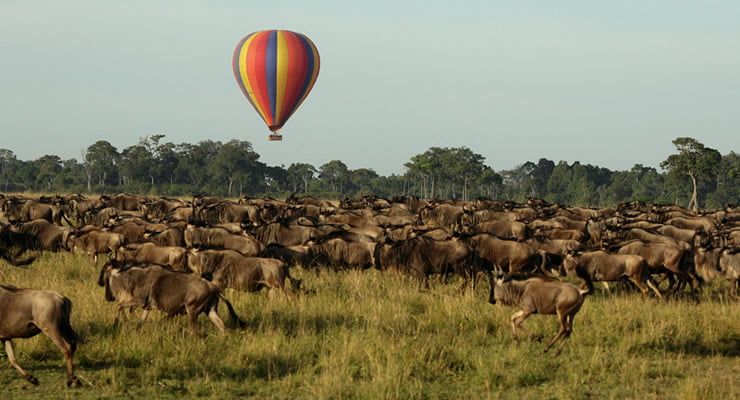
The Masai Mara is the single most photographically productive wildlife destination on earth. The open rolling grassland with its clean horizons, the extraordinary density of predators, the wildebeest Migration and Mara River crossings (July to October), the resident cheetah families and the quality of the light at altitude combine to create a photographic environment unlike anywhere else. The private conservancies bordering the national reserve offer off-road driving, which allows vehicle positioning independent of tracks, transforming the quality of background and approach for wildlife photography.
Serengeti and Ngorongoro
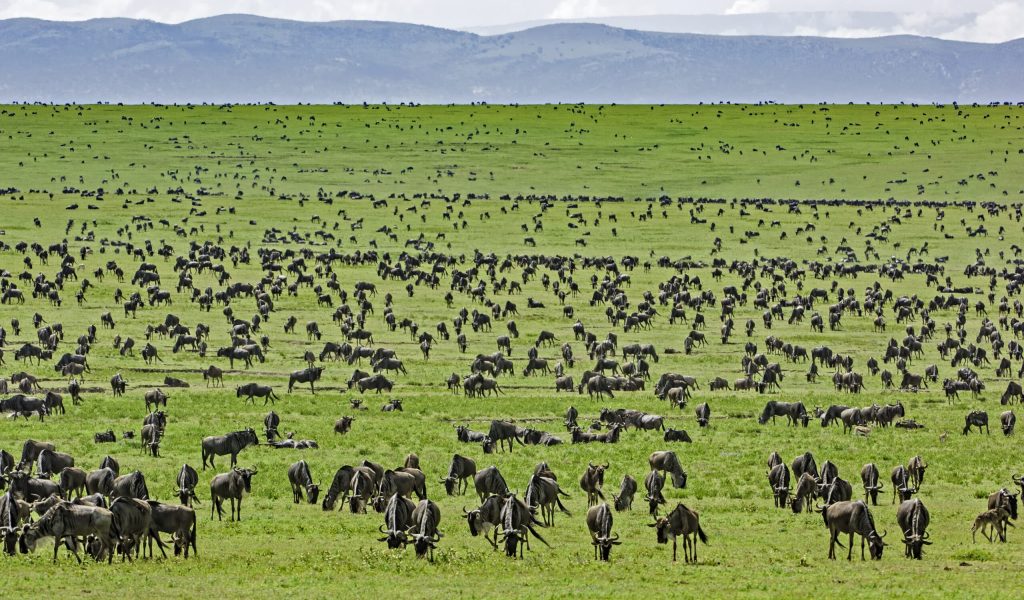
The Serengeti's vast scale produces a different quality of wildlife photograph to the Mara: wider, more atmospheric, the animals dwarfed by the immensity of the plains. The Serengeti's kopje granite outcrops provide extraordinary leopard and lion perching spots. The calving season in the southern Serengeti (January to March) is one of the most dramatic and productive periods for wildlife photography anywhere in Africa, with thousands of wildebeest calves and the associated predator activity. Ngorongoro Crater offers a completely contained, dense ecosystem where every drive produces exceptional encounters in a landscape framed by the crater walls.
Uganda: Gorillas, Forest and Waterways
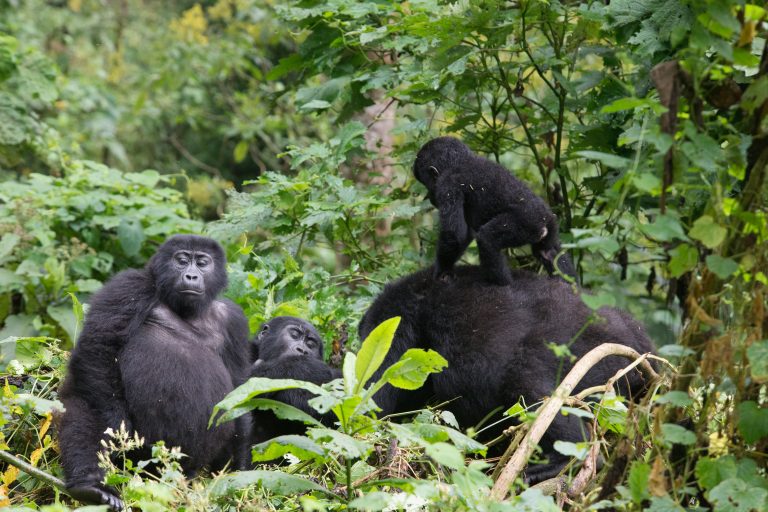
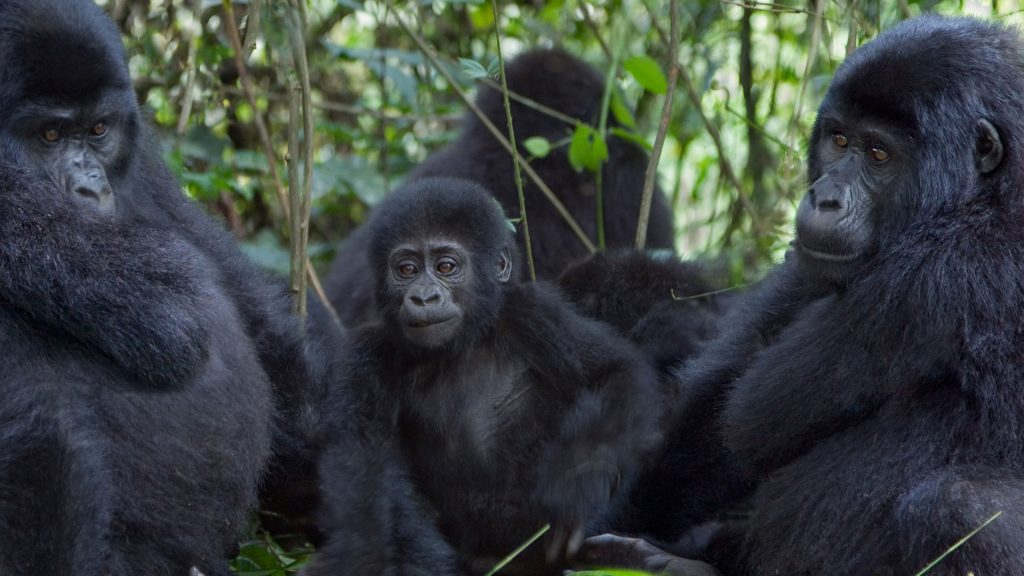
Uganda's photographic opportunities are unlike Kenya and Tanzania: more intimate, more challenging technically and in many ways more rewarding. The gorilla trekking experience produces some of the most powerful wildlife portraits available anywhere: a silverback at 4 metres in dappled forest light is an encounter of extraordinary photographic and emotional intensity. The Kazinga Channel afternoon boat safari at Queen Elizabeth delivers waterbird and hippo photography at distances impossible from land. Murchison Falls's Victoria Nile produces dramatic landscape photography combining water, wildlife and the falls themselves.
Rwanda: Gorillas and Virunga Landscapes
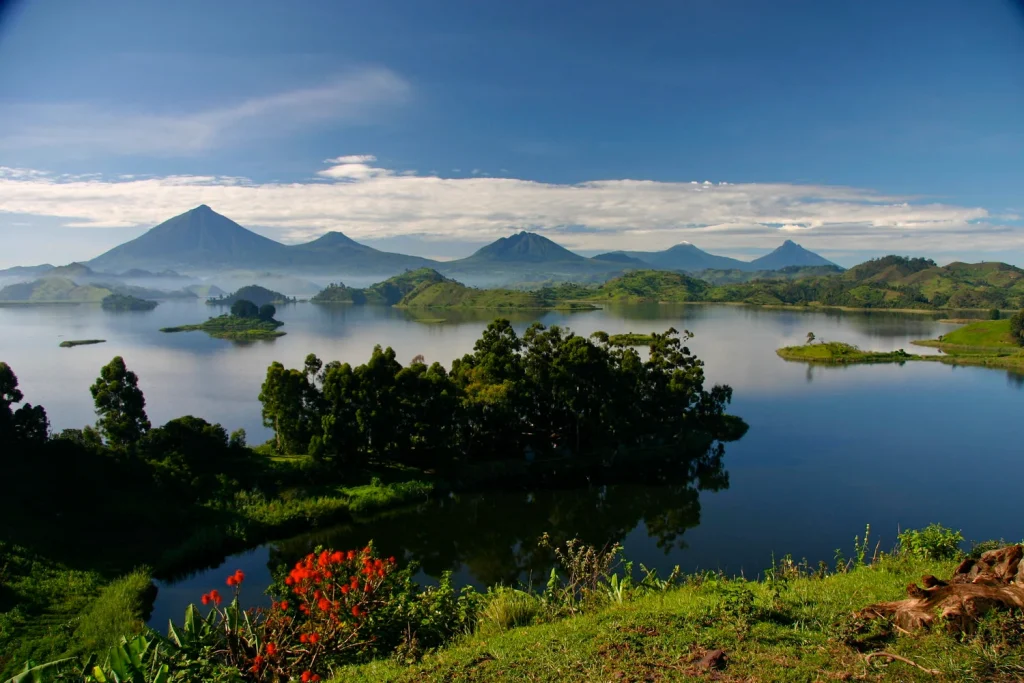
Rwanda offers a tighter, more focused photographic canvas than Uganda or Kenya. The mountain gorilla trekking at Volcanoes National Park delivers the same extraordinary primate photography as Bwindi but in a different forest environment, with the Virunga volcanic peaks visible above the forest canopy in clear weather. The golden monkey habituation experience at Mgahinga's Rwandan equivalent offers extended time with this extraordinarily photogenic primate at close range. The Virunga volcanic landscape itself, particularly at dawn and dusk when the mist moves through the bamboo forest, is among the most atmospheric landscapes available anywhere in Africa.
The Light is Everything
East Africa sits at the equator. The sun rises and sets fast, the golden hours are brief and intense, and the quality of light in those windows is genuinely unlike anywhere else on earth. Know the light cycle and plan your day around it.
The sky turns deep blue before the sun rises. Excellent for silhouettes at waterholes, atmospheric wide-angle landscapes. Low noise from vehicles and guides. Wildlife is active from overnight hunting.
The sun clears the horizon and the quality of light transforms everything. Warm orange and gold tones, long shadows, beautiful rim lighting on animal fur. The 45 minutes after sunrise is the single best photographic window of the day.
Harsh overhead light flattens dimension and washes out colour. Wildlife is largely inactive. Return to lodge for editing, charging, rest and meal. Do not waste golden hour energy on midday driving. This is rest time.
The best predator activity of the day as animals emerge. The last hour of sun delivers warm amber light from a low angle that wraps around subjects and creates the images that define East African wildlife photography. Stay until last light, never leave early.
What to Bring to East Africa
Your Most Important Investment
- 100-400mm zoom: the best all-round lens for East Africa wildlife
- 150-600mm zoom: exceptional reach for big cat and raptor photography
- 500mm or 600mm prime: for serious wildlife photographers targeting specific subjects
- 70-200mm f/2.8: excellent for social behaviour, gorilla portraits and low light
- Avoid anything under 100mm as the primary wildlife lens
- A teleconverter (1.4x) on a 500mm adds meaningful reach with minimal quality loss on modern cameras
Any Modern Camera Works
- Sony A9 III or A1: fastest autofocus, best for action sequences
- Nikon Z8 or Z9: outstanding resolution and subject tracking
- Canon R5 Mark II or R3: excellent all-round choice
- OM System OM-1 Mark II: lighter weight, excellent reach
- Any modern mirrorless with bird/animal eye autofocus performs well
- Smartphone: modern flagships produce impressive results when positioning is correct
- Bring two bodies if possible to avoid lens changes at critical moments
Everything Else
- Beanbag lens rest: the most important accessory for vehicle photography
- Extra batteries: cold pre-dawn temperatures drain quickly
- Dual-slot memory cards with adequate capacity for 5 to 7 days
- Laptop or iPad for field editing and backup
- Dust-proof camera bag: dust is the primary hazard
- Lens wipes and blower for daily dust cleaning
- Neutral density and circular polariser filters for landscape work
- Power bank for USB charging in the vehicle
The Difference Between Good and Great Photographs
Stay at the Sighting
The single most important photography tip in East Africa is to stay at any productive sighting for as long as possible rather than moving on. The second and third hour at a lion kill, a cheetah hunt or a gorilla group produces fundamentally better images than the first fifteen minutes. Behaviour develops, light changes and subjects relax. The private vehicle makes this possible. Stay, wait, and the photograph will come.
Eye Level is Everything
The most impactful wildlife photographs are taken at the subject's eye level. In a game drive vehicle this means shooting from the lowest possible window position, using a beanbag rest, with the lens as close to the window line as possible. The difference between a frame taken at shoulder height and one taken at door height is the difference between a tourist snapshot and a professional photograph. Sit low, rest the lens and get level with the animal's eye.
Watch the Background
A perfect subject in poor light with a clean background will always outperform a perfect subject in good light against a cluttered one. Constantly scan behind your subject. Ask your guide to reposition until the background is clean: open sky, uniform grass, distant treeline. The clean background isolates the subject and forces the viewer's eye toward the animal. This is the difference between a snapshot and an image.
Patience Over Volume
East Africa tempts every photographer into a volume trap: driving from sighting to sighting and accumulating thousands of frames of animals at medium distance in flat light. The images that define East African wildlife photography come from patience: choosing one productive situation, staying with it for hours and waiting for the specific moment of behaviour, light quality and positioning that produces something extraordinary. Shoot less. Stay longer. Return with fewer but better frames.
For Gorilla Photography
Gorilla photography presents unique technical challenges: low forest light, variable backgrounds, close distances and unpredictable movement. A 70-200mm f/2.8 is the ideal lens, wide enough to include a whole gorilla in frame but with enough reach for faces. Set ISO to Auto with a minimum of 1/500s shutter speed. Shoot burst mode during movement sequences. Use face detection autofocus on modern mirrorless bodies. Your 1-hour permit time goes fast: have your settings dialled in before the first sighting.
Include the Landscape
East Africa's landscapes are as extraordinary as its wildlife and the best photographs from the region combine the two. The Serengeti plains at dawn with a single acacia tree silhouetted against an orange sky. Amboseli elephants with Kilimanjaro behind them. Ngorongoro Crater wall framing a cheetah. These landscape-wildlife compositions take effort: they require patience for the right light, the right positioning and the right moment. They are worth ten times the effort of a standard wildlife close-up.
Photographic Safaris in Pictures